
NEGOCOACH
220
Origin : Cognitive science

🧠 Cognitive science

Behavioural economics & social psychology

R. Cialdini ("Influence", 1984), D. Kahneman & A. Tversky, R. Thaler, D. Ariely.

Full detail in the “Origin & history” section below.

220

The Horn Effect

Social influence Technique 220 / 360
Alexandre Baumberger

Author of the library

Alexandre Baumberger

Negotiation lecturer at KEDGE Business School

A rare threefold background serving negotiation: teaching, commercial justice and audit, backed by experience as a company director in Bordeaux.

  • Teaching, KEDGE Business School Negotiation lecturer since 2014 (12 years).
  • Commercial justice, Commercial Court Judge from 2018 to 2026: litigation, then insolvency proceedings.
  • Audit & advisory, over 20 years Tax, employment and financial audit in major firms, for large groups.
In brief

The Horn effect is the negative flip side of the Halo effect: a single unfavourable trait contaminates the entire judgement. A limp handshake, a spelling mistake, a scruffy outfit, and one ascribes to the person general incompetence, dishonesty or laziness. A visible flaw casts a shadow that darkens the wholei, unrelated to the person's actual qualities.

Reading level

At a glance

Its family profile at a glance

Effectiveness Psychologicalimpact Discretion Preparation Relationalrisk Ethics
8.0 / 10 Tactical potential

Vigilance: high (6.0/10) · Preparation required: 4/10

Grounding in the source school School grounded in experimental research

Indicative profile: it situates the “Social influence” family as the Cognitive science school practises it, not this technique taken in isolation. Techniques from the same family and school therefore share the same profile. NEGOCOACH editorial rating out of 10, non-experimental · the higher the “relational risk” value, the more costly the technique is to the relationship.

NEGOCOACH assessment

How to read this rating

Tactical potential 8.0/10 (effectiveness, impact, discretion) and vigilance high (relational and ethical risk): two distinct readings, deliberately never merged into a single score that would reward risk. NEGOCOACH editorial rating calibrated from the “Social influence” family and the “Cognitive science” school. Each criterion is rated out of 10; click to understand what it measures.

  • Effectiveness 8/10 · Very high

    How far the technique can carry the negotiation in the intended direction when it is well executed.

  • Psychological impact 9/10 · Very high

    Strength of the effect produced on the counterpart's perceptions, emotions and decisions.

  • Discretion 7/10 · High

    How hard it is for the other party to notice the technique is being used. A high value = very discreet.

  • Preparation 4/10 · Moderate

    The information, analysis and rehearsal required upfront to use it effectively.

  • Relational risk 5/10 · Moderate

    Potential cost to the relationship and to trust if the technique is spotted, refused or fails. A high value = riskier.

  • Ethics 4/10 · Moderate

    Moral acceptability: fairness, transparency and respect for the counterpart's autonomy. A high value = more defensible.

Level of evidence

School grounded in experimental research

The school this technique stems from is grounded in replicated, peer-reviewed experimental work. This indicator qualifies the school, not the experimental validation of this technique taken in isolation.

Indicative NEGOCOACH editorial rating, for teaching purposes. For “Relational risk”, a high value signals a cost to the relationship, not a quality.

Horn overview


Origin & history

The Horn effect is the negative corollary of the Halo effect identified by Edward Thorndike in 1920: just as a positive trait radiates favourably, a negative trait overshadows everything else. The name plays on the opposition between the halo of the angel's aureole and the horns of the devil. It rests on the same mechanism of cognitive generalisation and on the negativity bias, which gives unfavourable information disproportionate weight.


Definition and principle

The brain, more sensitive to threats than to rewards (negativity bias), amplifies an unfavourable cue and extends it to the whole picture. A detail, an accent, a hesitation, a minor error, becomes the lens through which the person is read, and neutral or positive elements are reinterpreted unfavourably. More insidious than the Halo, the Horn effect takes hold more quickly and lasts longer, because a negative prejudice is hard to dislodge.


Concrete examples of application

Application by context

The same technique, across every negotiation settings

Context 1 / 8

Sales negotiation

A salesperson turns up late and dishevelled to the first meeting. With no other cue, the client concludes that their company is careless and unreliable, and now scrutinises the offer with a wariness that dooms the sale.

How to apply it

Eliminate salient negative signals (lateness, dress, mistakes): a single one is enough to cast a shadow over your entire credibility.

Strengths

Being aware of it guards against breakdowns of trust caused by a single detail.

Weaknesses

Once the shadow has settled, undoing it demands far more effort than prevention would have cost.
Context 2 / 8

Procurement negotiation

A buyer receives a proposal riddled with mistakes and badly laid out. They infer a general lack of rigour and rule the supplier out, even though its technical solution may have been the best.

How to apply it

Take care not to disqualify an entire offer over a flaw of form; separate the quality of substance from the quality of presentation.

Strengths

Correcting the bias avoids eliminating a good supplier for a secondary reason.

Weaknesses

A flaw of form remains a genuine signal of care that it is not always wrong to read into.

Context 3 / 8

Labour negotiation

In an interview, a candidate has an irritating verbal tic or a glaring error on their CV. The recruiter, fixated on this detail, underestimates otherwise solid competencies and rules out a good candidate.

How to apply it

In assessment, isolate the one-off flaw to stop it contaminating the overall rating; judge each competency separately.

Strengths

Vigilance improves fairness and avoids losing good candidates over a detail.

Weaknesses

The negativity bias makes this detail very hard to set aside once noticed.

Context 4 / 8

Crisis management

A company handles a crisis well overall, but a spokesperson has a clumsy, much-discussed reaction. This single misstep eclipses the whole response and becomes the symbol of a supposed general incompetence.

How to apply it

In crisis communication, a publicised misstep can wipe out an otherwise strong record; lock down every statement, because the shadow spreads fast.

Strengths

Understanding the effect imposes the rigour that protects reputation in sensitive periods.

Weaknesses

A single stray detail is enough to tip perception, despite otherwise solid handling.

Context 5 / 8

Political negotiation

A public official with a respectable record is caught out by an ill-judged remark or an unfortunate image. That detail, replayed endlessly, becomes the mark of their supposed incompetence and erases everything else they have done.

How to apply it

On the public stage, a viral negative signal can redefine an entire image; every utterance must be calibrated, because the shadow is instantaneous.

Strengths

Identifying the mechanism allows one to anticipate and defuse at-risk details.

Weaknesses

Once the label sticks, it retrospectively colours every past and future action.

Context 6 / 8

Real-estate negotiation

At the viewing, a strong smell or a dirty hallway at the entrance puts the buyer off from the outset. This first negative signal leads them to see flaws everywhere, and an objectively good property goes unsold.

How to apply it

Hunt down entrance repellents (smells, clutter, darkness): a single one is enough to cast a shadow over the whole property from the threshold.

Strengths

Neutralising these signals avoids sinking the perception of a quality property.

Weaknesses

The initial shadow persists even when the rest of the viewing is excellent.

Context 7 / 8

Cross-cultural negotiation

A foreign partner, through ignorance, commits a cultural blunder (mishandling the business card in Japan, an inappropriate gesture). This isolated slip earns them the reputation of being disrespectful and unserious across the whole relationship.

How to apply it

Anticipate breaches of cultural etiquette: in cultures sensitive to codes, a single blunder casts a lasting shadow over perceived reliability.

Strengths

Cross-cultural preparation prevents a detail from ruining a promising relationship.

Weaknesses

The blunder is often invisible to its author, who cannot understand the source of the distrust.

Context 8 / 8

Family negotiation

A teenager does something notably foolish. Their parents generalise it ("you can never be trusted") and now read every one of their actions through that prism, fuelling conflict and unfairness.

How to apply it

Stop an isolated slip from becoming a blanket verdict on the person; name the act without labelling the child.

Strengths

Distinguishing the act from the person preserves the relationship and self-esteem.

Weaknesses

In the heat of emotion, negative generalisation is a reflex that is hard to hold back.


Counter-techniques

Spot and neutralise this technique

Negotiation is also played on defence. Here is how to recognise this technique when it is used against you, and turn it around.

Detect

The signals that give it away

  • "Everyone does it"
  • An authority invoked to close the debate
  • A gift followed by a request (forced reciprocity)

Neutralise

The counters that defuse it

  • Check the real norm
  • Question the authority's legitimacy
  • Refuse the debt created by the gift

Turn around

Turn it into an advantage

Turn social proof around: "Actually, the best do the opposite."

The trap to avoid

Conforming for fear of being the only dissenter.

In brief

  • Difficulty: Easy to fall for, hard to correct
  • Estimated effectiveness: Very high (negative)
  • Time to implement: Instant
  • Fields of application: Sales, Recruitment, Crisis communication, Politics, Relationships
  • Synonyms: Horns effect, Negative halo effect, Reverse-halo effect
  • Tags: negativity bias, first impression, Thorndike, prejudice, reputation

Strengths and weaknesses

The Horn effect reveals a major vulnerability of perception: a single unfavourable detail can ruin a credibility built with care. Its practical value is twofold: it imposes a discipline of signals (attending to whatever might cast a shadow) and it alerts the evaluator to their own tendency to generalise the negative. Its difficulty: the negativity bias makes it particularly quick and tenacious.


When to use this technique

To be neutralised whenever you form a judgement (recruitment, selection, appraisal): do not condemn a whole on an isolated flaw. To be pre-empted whenever you are being judged: eliminate salient negative signals before they create the shadow. Maximum vigilance in high-exposure contexts (sales, media, politics) where the slightest misstep spreads.


How to recognise and counter this technique

Recognise: an unfavourable detail captures all your attention and makes you reread everything else negatively. Neutralise: name the flaw, contain it, and assess the other dimensions independently, seeking the positives it obscures. Turn it around: if you are on the receiving end, address the negative point head-on to isolate it and prevent its generalisation.


Limits and ethics

Guarding against the Horn effect must not lead one to ignore genuine warning signs: sometimes a detail really does reveal an underlying problem. The difficulty lies in sorting the relevant cue from the unfair prejudice. Ethically, exploiting the Horn effect to smear an opponent over a blown-up detail is unfair manipulation. The rule: judge the whole on facts, not on a shadow.


Variants and related techniques

The mirror image of the Halo effect (a positive trait embellishes the whole). Reinforced by the negativity bias and the confirmation bias. A cousin of the Golem effect (low expectations manufacturing failure) and of stigmatisation.


Going further

  • Edward L. Thorndike, "A Constant Error in Psychological Ratings", Journal of Applied Psychology, 1920.
  • Paul Rozin & Edward Royzman, "Negativity Bias, Negativity Dominance, and Contagion", Personality and Social Psychology Review, 2001.
  • Daniel Kahneman, Thinking, Fast and Slow, 2011.

Aims of the technique

  • Become aware that a single trait perceived negatively (appearance, accent, lateness, clumsy wording) can unfairly disqualify a counterpart as a whole and distort the entire negotiation.
  • Neutralise this bias in oneself in order to assess the other side on substance (offer, arguments, room for manoeuvre) rather than on an initial unfavourable impression.
  • Anticipate and correct the Horn effect one may trigger in the other party by attending to signals liable to be misread (punctuality, dress, first message).
  • Avoid premature walk-away decisions based on a negative detail at the expense of an overall advantageous agreement.
  • Distinguish a genuinely disqualifying signal (proven bad faith) from a merely unpleasant trait that does not affect the value of the deal.

Famous cases

Sales · The supplier ruled out over a detail: A buyer receives two technically equivalent offers. The first salesperson arrives five minutes late in a creased shirt; the second is impeccable. Unconsciously, the buyer judges the first company "unreliable" and favours the second, even though the first supplier's bid was superior on lead times and warranty. A single isolated negative trait (the lateness) contaminated the assessment of unrelated competencies: this is the Horn effect in action.

Everyday life · The accent that discredits: During a rental negotiation, a candidate with a solid financial file speaks with a strong accent and some hesitation. The landlord wrongly infers a lack of seriousness and demands an additional guarantor, applying to a perfectly solvent candidate the distrust that a single negative signal has bred.


Common mistakes

  • Confusing an unpleasant trait (appearance, tone, awkwardness) with a genuine flaw of competence or reliability, without checking the facts.
  • Letting a negative first impression freeze the judgement instead of revising it as new information arrives.
  • Neglecting one's own signals (lateness, dress, wording) that can trigger the Horn effect in the other party before you have even argued your case.
  • Breaking off or hardening a negotiation on the basis of an irritating detail, missing an objectively advantageous agreement.
  • Believing oneself immune to this bias: the Horn effect operates largely unconsciously, even in experienced negotiators.

Scientific foundations

  • Edward L. Thorndike (1920) A constant error in psychological ratings Journal of Applied Psychology, 4(1), 25-29, DOI: 10.1037/h0071663
  • Daniel Kahneman (2011) Thinking, Fast and Slow Farrar, Straus and Giroux
  • Richard E. Nisbett & Timothy D. Wilson (1977) The halo effect: Evidence for unconscious alteration of judgments Journal of Personality and Social Psychology, 35(4), 250-256, DOI: 10.1037/0022-3514.35.4.250

Quick exercise

Test yourself before answering

Answer in your head, then reveal the solution. Memory is built through active recall.

1 Quels signaux doivent vous alerter ?
  • "Everyone does it"
  • An authority invoked to close the debate
  • A gift followed by a request (forced reciprocity)
2 Quelles parades appliquer ?
  • Check the real norm
  • Question the authority's legitimacy
  • Refuse the debt created by the gift

Frequently asked questions

The questions we get most

What is the "The Horn Effect" technique?

The Horn effect is the negative flip side of the Halo effect: a single unfavourable trait contaminates the entire judgement. A limp handshake, a spelling mistake, a scruffy outfit, and one ascribes to the person general incompetence, dishonesty or laziness. A visible flaw casts a shadow that darkens the wholei, unrelated to the person's actual qualities.

Is the "The Horn Effect" technique ethical?

It sits on the line: effective, but it can tip into manipulation if it exploits an information asymmetry. Use it with measure and without deliberate deceit.

How do you defend against "The Horn Effect"?

Conforming for fear of being the only dissenter. The right reflex: check the real norm.

What is the "The Horn Effect" technique based on?

NEGOCOACH does not assess the experimental validation of this technique in isolation. What we document is the grounding of its source school (Cognitive science): school grounded in experimental research. Full detail is in the "At a glance" section of this page.

Practise with AI

Three ready-to-use prompts

Copy, paste into your assistant, replace the [brackets]. Works with ChatGPT, Claude, Gemini, Mistral, Perplexity.

Prepare

Build your plan before the meeting

You are an expert negotiation coach. Help me prepare to use the "The Horn Effect" technique in the following situation: [describe your situation]. Give me: the conditions for success, a 3-step script, my counterpart's likely objections and how to answer them.

Simulate

Rehearse against an AI counterpart

Play the role of my counterpart in a negotiation. I am going to test the "The Horn Effect" technique. React realistically and with resistance, do not give in too quickly, then at the end analyse my performance and suggest 3 concrete improvements.

Debrief

Analyse a past negotiation

Here is how my negotiation went: [paste the exchanges]. Analyse whether the "The Horn Effect" technique was used well, what worked, the mistakes made, and spell out precisely what I could have done better.

References

Bibliography & credible sources

Founding works of the 🧠 Cognitive science school this technique belongs to.

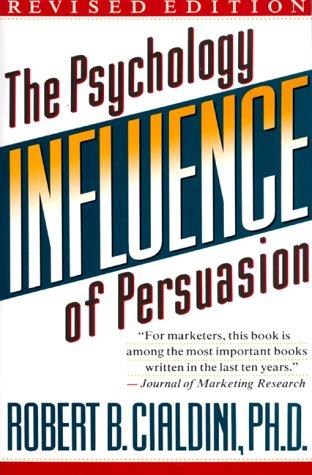
  • Cover: Influence, The Psychology of Persuasion

    Influence, The Psychology of Persuasion

    Book

    R. Cialdini · 1984

    The founding work on the mechanisms of persuasion: six universal principles (reciprocity, consistency, social proof, authority, liking, scarcity) illustrated with striking experiments. A landmark in social psychology.

  • Cover: Thinking, Fast and Slow

    Thinking, Fast and Slow

    Book

    D. Kahneman · 2011

    The sum of Kahneman's work on decision-making: two systems of thought, one fast and intuitive, the other slow and analytical, and the long list of biases that distort our judgements. Essential to understanding others... and yourself.

  • Cover: Nudge

    Nudge

    Book

    R. Thaler & C. Sunstein · 2008

    How to steer choices without constraint, by acting on the "choice architecture". The book popularised the nudge and behavioural economics applied to public policy as much as to management.

  • Judgment under Uncertainty: Heuristics and Biases (Science)

    Article

    A. Tversky & D. Kahneman · 1974

    The founding paper (Science, 1974) that uncovered the heuristics and biases of judgement, including anchoring. The starting point of the behavioural-economics revolution.

R. Cialdini ("Influence", 1984), D. Kahneman & A. Tversky, R. Thaler, D. Ariely.

On video

See the technique in action

Videos to picture The Horn Effect and anchor it through examples.

Technique map

Where this technique sits

Every technique sits within a network: what it draws on, what it combines with, where it applies, and how to defend against it.

Levers engaged

biases & emotions

Countered by

Spot its signals, neutralise it and turn it around with the defensive playbook on this page.

See the counter-techniques

Key takeaways

  • En une phrase

    The Horn effect is the negative flip side of the Halo effect: a single unfavourable trait contaminates the entire judgement. A limp handshake, a spelling mistake, a scruffy outfit, and one ascribes to the person general incompetence, dishonesty or laziness. A visible flaw casts a shadow that darkens the wholei, unrelated to the person's actual qualities.

  • The right reflex

    Turn social proof around: "Actually, the best do the opposite."

  • Never do this

    Conforming for fear of being the only dissenter.

8.0/10 tactical potential High vigilance School grounded in experimental research

Master this technique in real situations?

Our programmes turn theory into a concrete advantage.

Explore our programmes
Call Book a call