
NEGOCOACH
224
Origin : Cognitive science

🧠 Cognitive science

Behavioural economics & social psychology

R. Cialdini ("Influence", 1984), D. Kahneman & A. Tversky, R. Thaler, D. Ariely.

Full detail in the “Origin & history” section below.

224

The IKEA Effect

Social influence Technique 224 / 360
Alexandre Baumberger

Author of the library

Alexandre Baumberger

Negotiation lecturer at KEDGE Business School

A rare threefold background serving negotiation: teaching, commercial justice and audit, backed by experience as a company director in Bordeaux.

  • Teaching, KEDGE Business School Negotiation lecturer since 2014 (12 years).
  • Commercial justice, Commercial Court Judge from 2018 to 2026: litigation, then insolvency proceedings.
  • Audit & advisory, over 20 years Tax, employment and financial audit in major firms, for large groups.
In brief

The IKEA effect describes the tendency to overvalue what we have helped to build ourselves. The piece of furniture assembled with our own hands, the jointly built project, the plan we took part in shaping all feel more precious than a ready-made equivalent. The effort invested creates emotional valuei: we no longer judge the object for what it is worth, but for the part of ourselves it contains.

Reading level

At a glance

Its family profile at a glance

Effectiveness Psychologicalimpact Discretion Preparation Relationalrisk Ethics
8.0 / 10 Tactical potential

Vigilance: high (6.0/10) · Preparation required: 4/10

Grounding in the source school School grounded in experimental research

Indicative profile: it situates the “Social influence” family as the Cognitive science school practises it, not this technique taken in isolation. Techniques from the same family and school therefore share the same profile. NEGOCOACH editorial rating out of 10, non-experimental · the higher the “relational risk” value, the more costly the technique is to the relationship.

NEGOCOACH assessment

How to read this rating

Tactical potential 8.0/10 (effectiveness, impact, discretion) and vigilance high (relational and ethical risk): two distinct readings, deliberately never merged into a single score that would reward risk. NEGOCOACH editorial rating calibrated from the “Social influence” family and the “Cognitive science” school. Each criterion is rated out of 10; click to understand what it measures.

  • Effectiveness 8/10 · Very high

    How far the technique can carry the negotiation in the intended direction when it is well executed.

  • Psychological impact 9/10 · Very high

    Strength of the effect produced on the counterpart's perceptions, emotions and decisions.

  • Discretion 7/10 · High

    How hard it is for the other party to notice the technique is being used. A high value = very discreet.

  • Preparation 4/10 · Moderate

    The information, analysis and rehearsal required upfront to use it effectively.

  • Relational risk 5/10 · Moderate

    Potential cost to the relationship and to trust if the technique is spotted, refused or fails. A high value = riskier.

  • Ethics 4/10 · Moderate

    Moral acceptability: fairness, transparency and respect for the counterpart's autonomy. A high value = more defensible.

Level of evidence

School grounded in experimental research

The school this technique stems from is grounded in replicated, peer-reviewed experimental work. This indicator qualifies the school, not the experimental validation of this technique taken in isolation.

Indicative NEGOCOACH editorial rating, for teaching purposes. For “Relational risk”, a high value signals a cost to the relationship, not a quality.

IKEA at a glance


Origins & history

The effect was named and demonstrated in 2012 by Michael Norton, Daniel Mochon and Dan Ariely, after the Swedish retailer whose customers assemble their own furniture. In their experiments (IKEA furniture, origami, storage boxes), participants valued objects they had built themselves markedly more highly, provided they had seen the task through to completion. The effect extends earlier work on the justification of effort (Aronson & Mills, 1959).


Definition and principle

Three conditions activate the effect: genuine effort supplied, a task carried through to completion (failure cancels it out) and a sense of competence or psychological ownership. The work invested turns into attachment, and attachment into perceived value. In influence terms, getting the other party to co-produce a solution, rather than handing it over ready-made, makes it more desirable to them and their commitment more solid, because they are then defending a work that is partly their own.


Concrete examples of application

Application by context

The same technique, across every negotiation settings

Context 1 / 8

Sales negotiation

A kitchen salesperson has the customer draw their own layout plan, choose each material and adjust each unit. Once the project has become "theirs", the customer is attached to it, negotiates less and is more willing to close.

How to apply it

Have the customer co-build the solution (configuration, choices, customisation); the effort invested creates attachment and commitment.

Strengths

Reinforces attachment, reduces competitive comparison and secures the sale.

Weaknesses

Time-consuming; unsuited to the customer in a hurry who wants an immediate turnkey solution.
Context 2 / 8

Procurement negotiation

A buyer who has co-developed the specification with a supplier feels a stakeholder in the proposed solution. This investment makes them more forgiving and more loyal to that supplier than to an equivalent competitor.

How to apply it

Recognise that co-building creates a preference bias; be wary of overvaluing a solution simply because you contributed to it.

Strengths

Being aware of it preserves objectivity when weighing up suppliers.

Weaknesses

Hard to shake off attachment to a solution you helped shape.

Context 3 / 8

Labour negotiation

Rather than imposing a reorganisation, a manager has the team co-design the new way of working. Having become co-author of the change, the team defends it and implements it with far more energy than a plan handed down from above.

How to apply it

Have the change co-produced by those who will have to apply it; ownership through effort guarantees buy-in and execution.

Strengths

A major lever for change management and lasting team commitment.

Weaknesses

Slower than an imposed decision; requires genuinely incorporating the contributions.

Context 4 / 8

Crisis management

Coming out of a crisis, a leader involves their teams in drawing up the recovery plan rather than decreeing it. With everyone feeling co-author of the solution, execution is carried by far stronger commitment.

How to apply it

Even under time pressure, have people take part in building the plan; the IKEA effect turns an imposed measure into an owned project.

Strengths

Converts resignation into active mobilisation at the critical moment.

Weaknesses

Participation must be sincere: a pseudo-consultation, once spotted, demobilises more than it mobilises.

Context 5 / 8

Political negotiation

A mayor launches a citizens' consultation in which residents co-design a neighbourhood redevelopment. Having become co-authors of the project, they support and defend it far more than a plan imposed by the town hall.

How to apply it

Organise genuine citizen co-building; taking part in the drafting creates buy-in that the best top-down communication cannot achieve.

Strengths

Strengthens the acceptability and legitimacy of public decisions.

Weaknesses

Token consultation = the opposite effect: a sense of manipulation and heightened rejection.

Context 6 / 8

Real-estate negotiation

A developer offers buyers the chance to customise their future home off-plan (partitions, finishes, kitchen). Invested in designing their "own place", they become attached to it even before handover and negotiate the price less.

How to apply it

Offer off-plan customisation; involvement in the design creates anticipated attachment that supports the price and the commitment.

Strengths

Secures the buyer's loyalty very early on and reduces withdrawals.

Weaknesses

Heightened expectations: the co-designing customer becomes more demanding about the final result.

Context 7 / 8

Cross-cultural negotiation

In an international partnership, the party that involves the other in jointly developing the solution (rather than imposing a "turnkey" model) secures far stronger commitment, particularly in cultures attached to consensus.

How to apply it

Favour co-development with the foreign partner; ownership through shared effort is decisive in consensus cultures (Japan, Scandinavia).

Strengths

Creates solid, lasting commitment in collectivist and consensus-driven cultures.

Weaknesses

A slower pace, sometimes poorly received by cultures that favour swift, hierarchical decision-making.

Context 8 / 8

Family negotiation

Parents involve their children in preparing a meal or organising a trip. Proud of their contribution, the children enjoy the result far more than if it had simply been handed to them.

How to apply it

Have them take part in the doing rather than handing everything over ready-made; the effort invested increases satisfaction and a sense of pride.

Strengths

Develops appreciation of effort, autonomy and shared enjoyment.

Weaknesses

Requires patience and letting go of a perfect result.


Counter-techniques

Spot and neutralise this technique

Negotiation is also played on defence. Here is how to recognise this technique when it is used against you, and turn it around.

Detect

The signals that give it away

  • "Everyone does it"
  • An authority invoked to close the debate
  • A gift followed by a request (forced reciprocity)

Neutralise

The counters that defuse it

  • Check the real norm
  • Question the authority's legitimacy
  • Refuse the debt created by the gift

Turn around

Turn it into an advantage

Turn social proof around: "Actually, the best do the opposite."

The trap to avoid

Conforming for fear of being the only dissenter.

In brief

  • Difficulty: Intermediate
  • Estimated effectiveness: High
  • Implementation time: Builds up during the doing
  • Fields of application: Sales, Management, Change management, Marketing, Consultation
  • Synonyms: Co-creation effect, Justification of effort, Psychological ownership
  • Tags: effort, co-building, Ariely, attachment, commitment

Strengths and weaknesses

The IKEA effect turns effort into attachment and attachment into lasting commitment: what we have helped to create, we defend. It is a major lever for commercial loyalty, change management and buy-in, because it makes the other party a co-author rather than a mere recipient. Its limit: it demands a real investment of time and sincere participation; a token involvement, once spotted, produces exactly the opposite effect.


When to use this technique?

Use it to anchor lasting commitment: have a solution, a plan or a change co-built. Ideal in project selling, participative management and consultation. Avoid it with anyone who wants a quick turnkey option, or when co-building is mere window dressing: false participation turns into distrust. Also take care not to overvalue what you yourself have helped to build.


How to spot and counter this technique

Spot it: you are made to contribute heavily to a solution, which increases your attachment to it. Neutralise it: separate the objective value of the solution from the attachment born of your effort, and compare it coldly with the alternatives. Turn it around: get the other party to co-build so as to commit them to a solution they will then defend.


Limits and ethics

The IKEA effect becomes a costly bias when it drives us to cling to an ineffective project solely because we built it (a close relative of the sunk-cost bias). Ethically, orchestrating a fake co-building to manipulate buy-in, an alibi consultation, a pseudo-customisation, betrays trust. The rule: participation must be authentic and genuinely built into the decision.


Variants and related techniques

It extends the justification of effort (Aronson & Mills, 1959) and connects with psychological ownership. A cousin of Cialdini's commitment and consistency principles, and of the sunk-cost bias. It stands opposed to top-down "turnkey" selling.


Further reading

  • Michael Norton, Daniel Mochon & Dan Ariely, « The IKEA Effect: When Labor Leads to Love », Journal of Consumer Psychology, 2012.
  • Elliot Aronson & Judson Mills, « The Effect of Severity of Initiation on Liking for a Group », Journal of Abnormal and Social Psychology, 1959.
  • Dan Ariely, The Upside of Irrationality, 2010.

Objectives of the technique

  • Increase the other party's buy-in to the agreement by having them actively take part in developing the solution
  • Reduce resistance and post-negotiation rejection (less buyer's remorse, less renegotiation)
  • Turn an adversary into a co-author of the agreement to secure its lasting implementation
  • Reinforce the sense of psychological ownership over the chosen solution
  • Make concessions easier: an idea the other party believes to be their own is more readily accepted

Famous cases

Sales · The jointly drafted specification: Rather than presenting a turnkey offer, a B2B supplier invites the customer to build the scope of the engagement together in a workshop: the customer chooses the modules, decides the options and drafts certain clauses. By the end, the proposal is no longer 'the vendor's offer' but 'our solution': the customer defends it internally before their own management and negotiates the price far less, because challenging the agreement would mean disowning their own work.

Diplomatic · The solution the other party thinks they found: Faced with two deadlocked parties, a mediator refrains from directly proposing the compromise they have in mind. They ask leading questions that bring each party to formulate the building blocks of the agreement themselves. When the final solution emerges, each perceives it as partly 'their own' and commits to it far more solidly than if it had been imposed from outside.


Common mistakes

  • Pretending to co-build when the solution is already locked in: manipulation, once perceived, destroys trust and the effect backfires
  • Letting the other party build without safeguards and ending up with an unbalanced agreement: co-building does not mean abandoning your own interests
  • Overlooking the condition for success: the IKEA effect only operates if the effort succeeds; a co-building that fails or is abandoned creates frustration and devaluation
  • Over-soliciting the other party to the point of tiring them or needlessly lengthening the process, turning involvement into irritation
  • Confusing the IKEA effect with mere flattery: it is not about complimenting the other party but about genuinely getting them to invest time and choices in the solution

Scientific foundations

  • Norton, M. I., Mochon, D., & Ariely, D. (2012) The IKEA effect: When labor leads to love Journal of Consumer Psychology, 22(3), 453-460, DOI: 10.1016/j.jcps.2011.08.002
  • Fisher, R., & Ury, W. (1981) Getting to Yes: Negotiating Agreement Without Giving In Houghton Mifflin

Quick exercise

Test yourself before answering

Answer in your head, then reveal the solution. Memory is built through active recall.

1 Quels signaux doivent vous alerter ?
  • "Everyone does it"
  • An authority invoked to close the debate
  • A gift followed by a request (forced reciprocity)
2 Quelles parades appliquer ?
  • Check the real norm
  • Question the authority's legitimacy
  • Refuse the debt created by the gift

Frequently asked questions

The questions we get most

What is the "The IKEA Effect" technique?

The IKEA effect describes the tendency to overvalue what we have helped to build ourselves. The piece of furniture assembled with our own hands, the jointly built project, the plan we took part in shaping all feel more precious than a ready-made equivalent. The effort invested creates emotional valuei: we no longer judge the object for what it is worth, but for the part of ourselves it contains.

Is the "The IKEA Effect" technique ethical?

It sits on the line: effective, but it can tip into manipulation if it exploits an information asymmetry. Use it with measure and without deliberate deceit.

How do you defend against "The IKEA Effect"?

Conforming for fear of being the only dissenter. The right reflex: check the real norm.

What is the "The IKEA Effect" technique based on?

NEGOCOACH does not assess the experimental validation of this technique in isolation. What we document is the grounding of its source school (Cognitive science): school grounded in experimental research. Full detail is in the "At a glance" section of this page.

Practise with AI

Three ready-to-use prompts

Copy, paste into your assistant, replace the [brackets]. Works with ChatGPT, Claude, Gemini, Mistral, Perplexity.

Prepare

Build your plan before the meeting

You are an expert negotiation coach. Help me prepare to use the "The IKEA Effect" technique in the following situation: [describe your situation]. Give me: the conditions for success, a 3-step script, my counterpart's likely objections and how to answer them.

Simulate

Rehearse against an AI counterpart

Play the role of my counterpart in a negotiation. I am going to test the "The IKEA Effect" technique. React realistically and with resistance, do not give in too quickly, then at the end analyse my performance and suggest 3 concrete improvements.

Debrief

Analyse a past negotiation

Here is how my negotiation went: [paste the exchanges]. Analyse whether the "The IKEA Effect" technique was used well, what worked, the mistakes made, and spell out precisely what I could have done better.

References

Bibliography & credible sources

Founding works of the 🧠 Cognitive science school this technique belongs to.

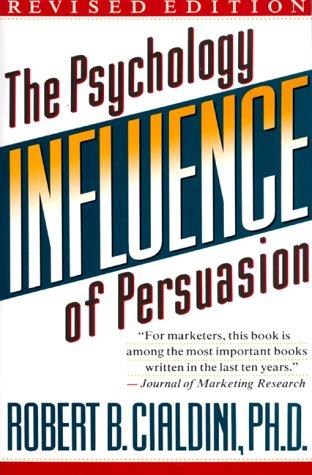
  • Cover: Influence, The Psychology of Persuasion

    Influence, The Psychology of Persuasion

    Book

    R. Cialdini · 1984

    The founding work on the mechanisms of persuasion: six universal principles (reciprocity, consistency, social proof, authority, liking, scarcity) illustrated with striking experiments. A landmark in social psychology.

  • Cover: Thinking, Fast and Slow

    Thinking, Fast and Slow

    Book

    D. Kahneman · 2011

    The sum of Kahneman's work on decision-making: two systems of thought, one fast and intuitive, the other slow and analytical, and the long list of biases that distort our judgements. Essential to understanding others... and yourself.

  • Cover: Nudge

    Nudge

    Book

    R. Thaler & C. Sunstein · 2008

    How to steer choices without constraint, by acting on the "choice architecture". The book popularised the nudge and behavioural economics applied to public policy as much as to management.

  • Judgment under Uncertainty: Heuristics and Biases (Science)

    Article

    A. Tversky & D. Kahneman · 1974

    The founding paper (Science, 1974) that uncovered the heuristics and biases of judgement, including anchoring. The starting point of the behavioural-economics revolution.

R. Cialdini ("Influence", 1984), D. Kahneman & A. Tversky, R. Thaler, D. Ariely.

On video

See the technique in action

Videos to picture The IKEA Effect and anchor it through examples.

Technique map

Where this technique sits

Every technique sits within a network: what it draws on, what it combines with, where it applies, and how to defend against it.

Levers engaged

biases & emotions

Countered by

Spot its signals, neutralise it and turn it around with the defensive playbook on this page.

See the counter-techniques

Key takeaways

  • En une phrase

    The IKEA effect describes the tendency to overvalue what we have helped to build ourselves. The piece of furniture assembled with our own hands, the jointly built project, the plan we took part in shaping all feel more precious than a ready-made equivalent. The effort invested creates emotional valuei: we no longer judge the object for what it is worth, but for the part of ourselves it contains.

  • The right reflex

    Turn social proof around: "Actually, the best do the opposite."

  • Never do this

    Conforming for fear of being the only dissenter.

8.0/10 tactical potential High vigilance School grounded in experimental research

Master this technique in real situations?

Our programmes turn theory into a concrete advantage.

Explore our programmes
Call Book a call