Context 1 / 6
Sales negotiation
A buyer explains that beyond a certain amount they must obtain the approval of a committee, which blocks any pressure to decide on the spot.

🛠️ Methods & tactics
Anglo-Saxon schools of negotiation
C. Karrass, R. Dawson, H. Cohen, N. Rackham (SPIN), T. Gordon (DESC / active listening).
Full detail in the “Origin & history” section below.

Author of the library
Negotiation lecturer at KEDGE Business School
A rare threefold background serving negotiation: teaching, commercial justice and audit, backed by experience as a company director in Bordeaux.
Limited authority (or restricted mandate) consists in presenting yourself as lacking the power to decide alone: "I'll have to refer this upwards", "my management will never accept that". This limit, whether real or feigned, guards against hasty decisions and makes it possible to resist pressure without becoming defensive.
At a glance
Vigilance: low (3.5/10) · Preparation required: 6/10
Indicative profile: it situates the “Managing concessions” family as the Methods & tactics school practises it, not this technique taken in isolation. Techniques from the same family and school therefore share the same profile. NEGOCOACH editorial rating out of 10, non-experimental · the higher the “relational risk” value, the more costly the technique is to the relationship.
NEGOCOACH assessment
Tactical potential 6.0/10 (effectiveness, impact, discretion) and vigilance low (relational and ethical risk): two distinct readings, deliberately never merged into a single score that would reward risk. NEGOCOACH editorial rating calibrated from the “Managing concessions” family and the “Methods & tactics” school. Each criterion is rated out of 10; click to understand what it measures.
How far the technique can carry the negotiation in the intended direction when it is well executed.
Strength of the effect produced on the counterpart's perceptions, emotions and decisions.
How hard it is for the other party to notice the technique is being used. A high value = very discreet.
The information, analysis and rehearsal required upfront to use it effectively.
Potential cost to the relationship and to trust if the technique is spotted, refused or fails. A high value = riskier.
Moral acceptability: fairness, transparency and respect for the counterpart's autonomy. A high value = more defensible.
School grounded in research and field practice
The school this technique stems from combines academic work with long field practice. This indicator qualifies the school, not this technique taken in isolation.
Indicative NEGOCOACH editorial rating, for teaching purposes. For “Relational risk”, a high value signals a cost to the relationship, not a quality.
This tactic, also known as "higher authority", was codified by the leading American negotiation trainers (Herb Cohen, Roger Dawson) in the 1970s and 1980s. It exploits a simple psychological lever: you cannot force someone who has no power to say yes. Paradoxically, the negotiator who displays limited authority is often in a stronger position than the one who decides everything, because they have a legitimate "brake" and an institutionalised pause for reflection.
The technique consists in invoking a higher body or a non-negotiable framework in order to play for time, refuse without direct confrontation, or make any concession subject to approval. It creates a buffer between the pressure and the decision.
Application by context
A buyer explains that beyond a certain amount they must obtain the approval of a committee, which blocks any pressure to decide on the spot.
A negotiator points out that they cannot commit their membership without consultation, thereby securing a pause for reflection and a way out.
The mediator invokes rules or a hierarchy that prevent them from immediately granting a demand, without turning it into a personal refusal.
A representative refers a demand to the approval of an assembly, gaining time and diluting the pressure.
An agent indicates that the floor price is set by the principal and that they have no power to depart from it.
In a negotiation, one party explains that they cannot decide without the agreement of the other heirs, which curbs any rush.
Counter-techniques
Negotiation is also played on defence. Here is how to recognise this technique when it is used against you, and turn it around.
The signals that give it away
The counters that defuse it
Turn it into an advantage
Answer any request with a symmetrical one: "If I do that, what do you do?"
Giving for free to "make a gesture".
Limited authority guards against concessions wrung out under pressure, and offers time and resistance without aggression. Its limits: overplayed, it irritates and makes the other side want to deal directly with "the real decision-maker"; it can also undermine your credibility if you appear to have no power.
Useful for playing for time, resisting pressure or avoiding a hasty commitment. To be avoided when the other side demands an interlocutor with decision-making power, or when speed of decision is an expected asset.
Sales · "I'll have to speak to my manager": A representative car-sales scenario. The customer obtains an initial price, then pushes for a further discount and complimentary options. The salesperson replies that they have no say over that level of rebate and must "go and see the manager". They step away for a few minutes, then return with an intermediate counter-proposal presented as an exceptional effort extracted from their superiors. Here, limited authority serves to slow the customer down, to add value to the final concession and to prevent the salesperson from giving everything away at once.
Corporate · The capped mandate in procurement: A representative scenario in industrial procurement negotiation. The buyer states from the outset that they hold a mandate approved by their finance department up to a precise amount, beyond which "they will have to reopen an approval cycle lasting several weeks". The supplier, keen to close before the end of the quarter, adjusts their offer to stay below the stated cap. The cap, whether real or constructed, acts as an impersonal constraint that is difficult to challenge head-on.
Everything hinges on the three words of the definition: this limit is "real or feigned", and these two cases have nothing to do with each other. A genuinely bounded mandate is information that you owe your interlocutor, and announcing it early spares them from exhausting their arguments on someone who cannot act on them. It is also a legitimate protection against hasty decision-making, and the best negotiators deliberately give themselves a mandate so as not to yield to fatigue. An invented mandate is of another nature altogether, and its flaw is asymmetry: it lets you absorb every concession while keeping a way out that you deny the other party, who is in fact negotiating against a body that does not exist. The penalty is predictable and severe: as soon as the ploy is suspected, the interlocutor stops talking to you and asks to see the person who decides, which disqualifies you as an interlocutor. The defensive remedy is, moreover, simple and is laid down at the very opening: "how far can you commit your firm?". A real mandate is information owed; an invented mandate is a way out that one reserves for oneself while denying it to the other.
Quick exercise
Answer in your head, then reveal the solution. Memory is built through active recall.
Frequently asked questions
Limited authority (or restricted mandate) consists in presenting yourself as lacking the power to decide alone: "I'll have to refer this upwards", "my management will never accept that". This limit, whether real or feigned, guards against hasty decisions and makes it possible to resist pressure without becoming defensive.
Yes. Used in good faith it stays within a fair negotiation: it structures the exchange without deceiving the other party. Being transparent about your intentions strengthens the long-term relationship.
Giving for free to "make a gesture". The right reflex: quantify the real value of each point.
NEGOCOACH does not assess the experimental validation of this technique in isolation. What we document is the grounding of its source school (Methods & tactics): school grounded in research and field practice. Full detail is in the "At a glance" section of this page.
Practise with AI
Copy, paste into your assistant, replace the [brackets]. Works with ChatGPT, Claude, Gemini, Mistral, Perplexity.
Build your plan before the meeting
You are an expert negotiation coach. Help me prepare to use the "The Limited Authority Technique" technique in the following situation: [describe your situation]. Give me: the conditions for success, a 3-step script, my counterpart's likely objections and how to answer them.
Rehearse against an AI counterpart
Play the role of my counterpart in a negotiation. I am going to test the "The Limited Authority Technique" technique. React realistically and with resistance, do not give in too quickly, then at the end analyse my performance and suggest 3 concrete improvements.
Analyse a past negotiation
Here is how my negotiation went: [paste the exchanges]. Analyse whether the "The Limited Authority Technique" technique was used well, what worked, the mistakes made, and spell out precisely what I could have done better.
References
Founding works of the 🛠️ Methods & tactics school this technique belongs to.
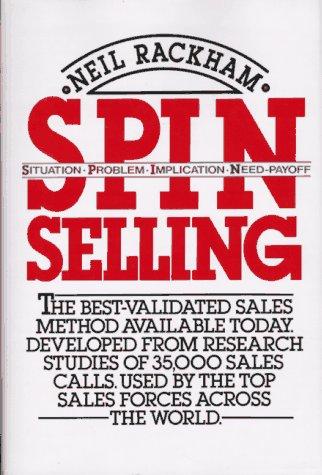
SPIN Selling
BookN. Rackham · 1988
Grounded in the analysis of thousands of sales calls, the SPIN method structures customer discovery through four types of question (Situation, Problem, Implication, Need-payoff) for complex sales.

The Negotiating Game
BookC. L. Karrass · 1970
A pragmatic classic of business negotiation: tactics, power balance and preparation. Karrass sums up his motto, you get what you negotiate, not what you deserve.

Secrets of Power Negotiating
BookR. Dawson · 1987
An arsenal of opening, middle and closing "gambits" to gain the upper hand in commercial negotiation, explained step by step.
C. Karrass, R. Dawson, H. Cohen, N. Rackham (SPIN), T. Gordon (DESC / active listening).
On video
Videos to picture The Limited Authority Technique and anchor it through examples.
A verified video selection is being enriched; the search above already surfaces the best videos on the topic.
Technique map
Every technique sits within a network: what it draws on, what it combines with, where it applies, and how to defend against it.
Spot its signals, neutralise it and turn it around with the defensive playbook on this page.
See the counter-techniquesLimited authority (or restricted mandate) consists in presenting yourself as lacking the power to decide alone: "I'll have to refer this upwards", "my management will never accept that". This limit, whether real or feigned, guards against hasty decisions and makes it possible to resist pressure without becoming defensive.
Answer any request with a symmetrical one: "If I do that, what do you do?"
Giving for free to "make a gesture".
Our programmes turn theory into a concrete advantage.