Context 1 / 6
Sales negotiation
A salesperson asks a prospect for their expert opinion on a point: flattered to be consulted and committed by their answer, the prospect becomes more cooperative.

🧠 Cognitive science
Behavioural economics & social psychology
R. Cialdini ("Influence", 1984), D. Kahneman & A. Tversky, R. Thaler, D. Ariely.
Full detail in the “Origin & history” section below.

Author of the library
Negotiation lecturer at KEDGE Business School
A rare threefold background serving negotiation: teaching, commercial justice and audit, backed by experience as a company director in Bordeaux.
Counter-intuitively, asking someone for a small favour can make them more favourably disposed towards you: having done you a favour, they rationalise their gesture by convincing themselves that they like you. Requesting a little help, rather than offering it, can therefore build rapport.
At a glance
Vigilance: high (6.0/10) · Preparation required: 6/10
Indicative profile: it situates the “Psychological influence” family as the Cognitive science school practises it, not this technique taken in isolation. Techniques from the same family and school therefore share the same profile. NEGOCOACH editorial rating out of 10, non-experimental · the higher the “relational risk” value, the more costly the technique is to the relationship.
NEGOCOACH assessment
Tactical potential 8.3/10 (effectiveness, impact, discretion) and vigilance high (relational and ethical risk): two distinct readings, deliberately never merged into a single score that would reward risk. NEGOCOACH editorial rating calibrated from the “Psychological influence” family and the “Cognitive science” school. Each criterion is rated out of 10; click to understand what it measures.
How far the technique can carry the negotiation in the intended direction when it is well executed.
Strength of the effect produced on the counterpart's perceptions, emotions and decisions.
How hard it is for the other party to notice the technique is being used. A high value = very discreet.
The information, analysis and rehearsal required upfront to use it effectively.
Potential cost to the relationship and to trust if the technique is spotted, refused or fails. A high value = riskier.
Moral acceptability: fairness, transparency and respect for the counterpart's autonomy. A high value = more defensible.
School grounded in experimental research
The school this technique stems from is grounded in replicated, peer-reviewed experimental work. This indicator qualifies the school, not the experimental validation of this technique taken in isolation.
Indicative NEGOCOACH editorial rating, for teaching purposes. For “Relational risk”, a high value signals a cost to the relationship, not a quality.
The effect takes its name from an anecdote recounted by Benjamin Franklin in his autobiography: to win over a political rival, he asked to borrow a rare book from him. The rival, flattered, obliged, and thereafter became a devoted friend. Franklin drew a maxim from this: “he that has once done you a kindness will be more ready to do you another than he whom you yourself have obliged.” Modern psychology has confirmed the phenomenon through Leon Festinger's theory of cognitive dissonance (1957): we adjust our feelings to stay consistent with our actions.
The technique consists in requesting a small commitment or favour from the other party, which leads them to justify their gesture through a positive attitude towards you. The act precedes and shapes the feeling, not the other way round.
Application by context
A salesperson asks a prospect for their expert opinion on a point: flattered to be consulted and committed by their answer, the prospect becomes more cooperative.
A negotiator asks the opposing party to help them understand a technical point, creating the beginnings of collaboration.
The mediator asks the person for a small gesture (“could you help me to…?”), which sparks a bond and a cooperative posture.
A leader asks an opponent for advice on a subject, drawing them closer through the commitment thereby created.
A buyer asks the seller to tell them the history of the house; drawn in, the seller develops a warmer relationship.
In a dispute, asking the other party for a small concrete favour re-establishes a relational bridge.
Counter-techniques
Negotiation is also played on defence. Here is how to recognise this technique when it is used against you, and turn it around.
The signals that give it away
The counters that defuse it
Turn it into an advantage
Verbalise the lever: "I feel you're playing on guilt", and naming it defuses it.
Mistaking an emotional bond for an objective argument.
The Franklin effect creates sympathy at little cost and inverts the logic of giving. Its limits: the favour requested must remain small and legitimate, otherwise it irritates; repeated or self-serving, it becomes counter-productive and can be seen as manipulation.
Useful for initiating a relationship or warming up a strained bond, through a modest and sincere request. To be avoided when the other party is already overloaded or wary.
Political · Franklin and the rival in the Pennsylvania Assembly: In his autobiography, Benjamin Franklin recounts how he won over an influential and hostile member of the Pennsylvania Assembly. Rather than doing him a favour to soften him up, Franklin asked to borrow a rare book from his library. The rival agreed, and Franklin returned it a week later with warm thanks. From then on, the man showed himself courteous and helpful, and the two became friends until his death. Franklin drew a maxim from this: he who has already done you a favour will be more disposed to do you another than the one to whom you have done one.
Sales · Soliciting the opinion of a reluctant client: A representative scenario: a salesperson faces a distant, sceptical buyer. Instead of piling on commercial gifts, they ask for a small favour: “You know your sector perfectly - would you be willing to read through this proposal and tell me what, in your view, might not fit your constraints?” By investing time to help the seller improve their offer, the buyer becomes involved, feels expert and valued, and develops a sympathy that warms the relationship and eases the rest of the negotiation.
The effect has something disarming about it: the person who does you a favour ends up genuinely liking you, by rationalising their gesture. No one is harmed, no information is distorted, and the bond created is real. That is what makes it an interesting borderline case rather than ordinary manipulation. The reservation concerns the origin of the bond. Asking for a favour because you need it, and accepting the debt that goes with it, is a normal relationship between people who work together. Manufacturing a favour you have no use for, for the sole purpose of triggering in the other party the mechanism that will make them like you, is obtaining affection through a lever of dissonance rather than through who you are; the attachment is authentic, its cause is not. A practical limit bounds its use: the effect only operates on a small favour freely given. A demand that is too heavy, or addressed to someone who cannot refuse, produces no sympathy - it produces a burden and resentment. Asking for a favour you need creates a bond; manufacturing one to install the bond means getting yourself liked through a mechanism.
Quick exercise
Answer in your head, then reveal the solution. Memory is built through active recall.
Frequently asked questions
Counter-intuitively, asking someone for a small favour can make them more favourably disposed towards you: having done you a favour, they rationalise their gesture by convincing themselves that they like you. Requesting a little help, rather than offering it, can therefore build rapport.
It sits on the line: effective, but it can tip into manipulation if it exploits an information asymmetry. Use it with measure and without deliberate deceit.
Mistaking an emotional bond for an objective argument. The right reflex: separate the emotion from the substance.
NEGOCOACH does not assess the experimental validation of this technique in isolation. What we document is the grounding of its source school (Cognitive science): school grounded in experimental research. Full detail is in the "At a glance" section of this page.
Practise with AI
Copy, paste into your assistant, replace the [brackets]. Works with ChatGPT, Claude, Gemini, Mistral, Perplexity.
Build your plan before the meeting
You are an expert negotiation coach. Help me prepare to use the "The Benjamin Franklin Effect Technique" technique in the following situation: [describe your situation]. Give me: the conditions for success, a 3-step script, my counterpart's likely objections and how to answer them.
Rehearse against an AI counterpart
Play the role of my counterpart in a negotiation. I am going to test the "The Benjamin Franklin Effect Technique" technique. React realistically and with resistance, do not give in too quickly, then at the end analyse my performance and suggest 3 concrete improvements.
Analyse a past negotiation
Here is how my negotiation went: [paste the exchanges]. Analyse whether the "The Benjamin Franklin Effect Technique" technique was used well, what worked, the mistakes made, and spell out precisely what I could have done better.
References
Founding works of the 🧠 Cognitive science school this technique belongs to.
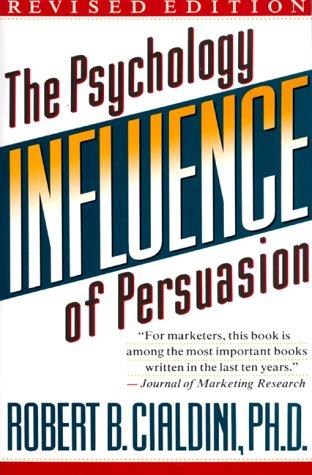
Influence, The Psychology of Persuasion
BookR. Cialdini · 1984
The founding work on the mechanisms of persuasion: six universal principles (reciprocity, consistency, social proof, authority, liking, scarcity) illustrated with striking experiments. A landmark in social psychology.

Thinking, Fast and Slow
BookD. Kahneman · 2011
The sum of Kahneman's work on decision-making: two systems of thought, one fast and intuitive, the other slow and analytical, and the long list of biases that distort our judgements. Essential to understanding others... and yourself.

Nudge
BookR. Thaler & C. Sunstein · 2008
How to steer choices without constraint, by acting on the "choice architecture". The book popularised the nudge and behavioural economics applied to public policy as much as to management.
Judgment under Uncertainty: Heuristics and Biases (Science)
ArticleA. Tversky & D. Kahneman · 1974
The founding paper (Science, 1974) that uncovered the heuristics and biases of judgement, including anchoring. The starting point of the behavioural-economics revolution.
R. Cialdini ("Influence", 1984), D. Kahneman & A. Tversky, R. Thaler, D. Ariely.
On video
Videos to picture The Benjamin Franklin Effect Technique and anchor it through examples.
Technique map
Every technique sits within a network: what it draws on, what it combines with, where it applies, and how to defend against it.
Spot its signals, neutralise it and turn it around with the defensive playbook on this page.
See the counter-techniquesCounter-intuitively, asking someone for a small favour can make them more favourably disposed towards you: having done you a favour, they rationalise their gesture by convincing themselves that they like you. Requesting a little help, rather than offering it, can therefore build rapport.
Verbalise the lever: "I feel you're playing on guilt", and naming it defuses it.
Mistaking an emotional bond for an objective argument.
Our programmes turn theory into a concrete advantage.