
NEGOCOACH
271
Origin : Methods & tactics

🛠️ Methods & tactics

Anglo-Saxon schools of negotiation

C. Karrass, R. Dawson, H. Cohen, N. Rackham (SPIN), T. Gordon (DESC / active listening).

Full detail in the “Origin & history” section below.

271

The Sharp Angle Close

Sales closing Technique 271 / 360
Alexandre Baumberger

Author of the library

Alexandre Baumberger

Negotiation lecturer at KEDGE Business School

A rare threefold background serving negotiation: teaching, commercial justice and audit, backed by experience as a company director in Bordeaux.

  • Teaching, KEDGE Business School Negotiation lecturer since 2014 (12 years).
  • Commercial justice, Commercial Court Judge from 2018 to 2026: litigation, then insolvency proceedings.
  • Audit & advisory, over 20 years Tax, employment and financial audit in major firms, for large groups.
In brief

The sharp angle close turns a buyer's request into a purchase commitment: when the customer asks for a concession ("can you throw in free delivery?"), the seller replies, "if I do, will you sign today?"i. The concession becomes conditional on the decision, turning a request into a closing lever.

Reading level

At a glance

Its family profile at a glance

Effectiveness Psychologicalimpact Discretion Preparation Relationalrisk Ethics
7.0 / 10 Tactical potential

Vigilance: moderate (5.0/10) · Preparation required: 4/10

Grounding in the source school School grounded in research and field practice

Indicative profile: it situates the “Sales closing” family as the Methods & tactics school practises it, not this technique taken in isolation. Techniques from the same family and school therefore share the same profile. NEGOCOACH editorial rating out of 10, non-experimental · the higher the “relational risk” value, the more costly the technique is to the relationship.

NEGOCOACH assessment

How to read this rating

Tactical potential 7.0/10 (effectiveness, impact, discretion) and vigilance moderate (relational and ethical risk): two distinct readings, deliberately never merged into a single score that would reward risk. NEGOCOACH editorial rating calibrated from the “Sales closing” family and the “Methods & tactics” school. Each criterion is rated out of 10; click to understand what it measures.

  • Effectiveness 8/10 · Very high

    How far the technique can carry the negotiation in the intended direction when it is well executed.

  • Psychological impact 7/10 · High

    Strength of the effect produced on the counterpart's perceptions, emotions and decisions.

  • Discretion 6/10 · High

    How hard it is for the other party to notice the technique is being used. A high value = very discreet.

  • Preparation 4/10 · Moderate

    The information, analysis and rehearsal required upfront to use it effectively.

  • Relational risk 4/10 · Moderate

    Potential cost to the relationship and to trust if the technique is spotted, refused or fails. A high value = riskier.

  • Ethics 5/10 · Moderate

    Moral acceptability: fairness, transparency and respect for the counterpart's autonomy. A high value = more defensible.

Level of evidence

School grounded in research and field practice

The school this technique stems from combines academic work with long field practice. This indicator qualifies the school, not this technique taken in isolation.

Indicative NEGOCOACH editorial rating, for teaching purposes. For “Relational risk”, a high value signals a cost to the relationship, not a quality.

Overview of The Sharp Angle Close


Origin & history

The sharp angle is a classic taught by Tom Hopkins and taken up throughout modern selling. It applies to the close the principle of the reciprocal concessioni so dear to Roger Dawson: never give ground without obtaining something in return. Here, the return is the purchase commitment itself.


Definition and principle

Where the classic close asks for the decision head-on, the sharp angle waits for the customer to make a request of their own and uses it as a pivot. The mechanism is one of consistency: a buyer who sets a condition ("if you add X, I'll take it") has already pictured themselves making the purchase; handing their own condition back to them as a commitment confronts them with their word. Answering "yes" to "if I do it, will you sign?" amounts to closing. The strength of the device lies in the fact that it does not create the request: it turns it around.


Concrete examples of application

Application by context

The same technique, across every negotiation settings

Context 1 / 8

Sales negotiation

A buyer, at the end of the negotiation, throws out: "And if you included team training, then we could move forward." Rather than giving in, the seller locks it down: "If I secure the training free of charge from my management, will you confirm the order today?" The buyer, who set the condition themselves, cannot back out without contradicting themselves: they commit.

How to apply it

Only use the sharp angle after an explicit request from the buyer: it is what gives you the pivot. Send back the symmetrical condition ("if I do X, will you do Y") calmly, without aggression. Make sure you can deliver the concession before making it conditional, otherwise you lose all credibility.

Strengths

Turns a request for a concession into a firm commitment; obtains something in return for any concession; draws on the buyer's consistency with their own word.

Weaknesses

Perceived as a trap if used too early or too mechanically; a seasoned buyer turns the question around and demands the concession without committing.
Context 2 / 8

Procurement negotiation

A seasoned buyer sees the reversal coming: as soon as they make a request, the seller attempts the "if I do it, will you sign?". They parry: "Do it first, then we'll see; I don't trade a question for a signature." They refuse to let their exploratory request turn into a commitment.

How to apply it

To foil the sharp angle, the buyer frames their requests as mere non-binding explorations, and clearly separates obtaining a concession from the final decision.

Strengths

By decoupling request and commitment, the buyer recovers concessions without tying themselves down prematurely.

Weaknesses

A firm seller may then refuse any concession without something in return, and the buyer loses an advantage that a conditional commitment would have earned them.

Context 3 / 8

Labour negotiation

In a pay negotiation, a union asks for an increase. Management turns it around: "If we grant this point on wages, will you commit to signing the overall agreement today?" The concession is only put on the table in exchange for the commitment to conclude.

How to apply it

Make any sensitive concession conditional on an overall commitment to sign, to avoid being nibbled point by point without a final agreement.

Strengths

Prevents the erosion of concessions one by one; forces the other side to commit to the whole package.

Weaknesses

May be experienced as an ultimatum and stall a negotiation that needed flexibility on timing.

Context 4 / 8

Crisis management

A negotiator, faced with a request ("I want to speak to so-and-so"), makes it conditional: "I can try to get that for you, but if I manage it, will you release someone in exchange?" The other side's request becomes the lever for a concrete return.

How to apply it

In a crisis, everything the other party asks for becomes an opportunity to negotiate something in return; give nothing away for free, every gesture is traded.

Strengths

Structures the give-and-take that moves a crisis negotiation towards resolution.

Weaknesses

Too explicit a haggling over human stakes can jar and raise tension rather than lower it.

Context 5 / 8

Political negotiation

A parliamentary group calls for an amendment. The government turns it around: "We can incorporate it, provided that in return your group guarantees its vote on the text as a whole." The request becomes the currency of a commitment of support.

How to apply it

Tie any concession to a guarantee of a vote or of overall support, to turn one-off requests into firm commitments.

Strengths

Secures overall support rather than conceding isolated points with no guarantee of a final outcome.

Weaknesses

Too rigid a conditionality may alienate a potential ally and cause the overall compromise to fail.

Context 6 / 8

Real-estate negotiation

A prospective buyer asks: "If you leave the fitted kitchen, I'll make an offer." The agent locks it in at once: "If I get the seller to leave the kitchen, will you put in your offer at the asking price today?" The buyer's request becomes the condition of their own commitment.

How to apply it

Seize every buyer request as a buying signal to convert: turn it into a commitment to a firm, dated offer.

Strengths

Turns a negotiation over furnishings or works into a trigger for a written offer.

Weaknesses

A buyer weighing several properties may take the reversal badly and pull out if the relationship lacks trust.

Context 7 / 8

Cross-cultural negotiation

A seller applies a direct sharp angle to a partner from a culture where negotiation proceeds through long relationship-building preliminaries. The immediate turning of the request into a commitment is felt as abrupt and transactional, contrary to the expected etiquette.

How to apply it

Adapt the pace to the culture's relationship to reciprocity: where the exchange must first build the relationship, delay the reversal and wrap it in the proper forms.

Strengths

Effective in direct, transactional cultures that value clear give-and-take.

Weaknesses

Perceived as rude or pushy in relationship-based cultures with slow negotiation, where binding too quickly wounds trust.

Context 8 / 8

Family negotiation

A teenager asks to go out. The parent turns it around: "Fine for the evening, if in exchange you commit to finishing your revision tomorrow morning, is it a deal?" The child's request becomes the basis for a clear reciprocal commitment.

How to apply it

Convert a request into an explicit reciprocal agreement, to set a clear framework without head-on conflict.

Strengths

Fosters responsibility and sets clear rules starting from the other party's own request.

Weaknesses

Made systematic, it turns family life into constant haggling and weakens unconditional trust.


Counter-techniques

Spot and neutralise this technique

Negotiation is also played on defence. Here is how to recognise this technique when it is used against you, and turn it around.

Detect

The signals that give it away

  • A false "final offer"
  • A "only now" bonus
  • An assumed agreement ("shall we go with that?")

Neutralise

The counters that defuse it

  • Test the "final" offer by pretending to leave
  • Ignore the artificial bonus
  • Validate nothing by default

Turn around

Turn it into an advantage

Set your own closing condition: "I'll sign if…"

The trap to avoid

Signing so as not to "miss" the offer.

In brief

  • Difficulty: Intermediate
  • Estimated effectiveness: High after a buyer request
  • Time to implement: Instant, on the rebound of a request
  • Fields of application: Sales, Collective bargaining, Real estate, Diplomacy
  • Synonyms: Sharp angle close, Conditional reversal, If I do X, you do Y
  • Tags: closing, sharp angle, conditional concession, Tom Hopkins, reciprocity

Strengths and Weaknesses

The sharp angle close does not create the request: it turns it around. By handing the buyer their own condition back as a commitment, it exploits the need for consistency with the word given and rules out any concession without something in return. It is one of the cleanest closes for converting a buying signal (the request) into a firm decision. Its strength presupposes that you can genuinely deliver the promised concession.


When to use this technique?

To be triggered only after an explicit request from the buyer, which supplies the pivot. To be avoided too early, before interest is established: a premature reversal comes across as a trap and hardens the other party. Ruled out if you cannot deliver the conditioned concession, or when facing a relationship-driven buyer whom too transactional and pushy a device would drive away.


How to recognise and counter this technique

Recognise it: as soon as you ask for a concession, you get "if I do it, will you commit?". Neutralise it: present your requests as mere non-binding explorations ("I'm looking at options, I'm not deciding yet") and decouple concession from signature. Turn it around: demand the concession first, decision afterwards ("do it, then we'll see"), and refuse to trade a question for a commitment.


Limits and ethics

The sharp angle stays fair as long as it formalises an exchange already wanted; it becomes problematic when it traps the buyer by their word into an unconsidered decision, exploiting the pressure of consistency to short-circuit reflection. The ethical line runs through respect for the right of withdrawal and the absence of undue pressure: a commitment wrung from someone caught off guard by the reversal does not amount to informed consent.


Variants and related techniques

An application of Roger Dawson's logic of the conditional concession to the close. Combines with the Trial close (identifying the request) and the Alternative close ("signature today or Monday?"). Stands in contrast to the unilateral concession and the head-on close, which do not rely on a buyer request.


Going further

  • Tom Hopkins, How to Master the Art of Selling, 1982.
  • Roger Dawson, Secrets of Power Negotiating, 1987.
  • Robert Cialdini, Influence: The Psychology of Persuasion, 1984.

Aims of the technique

  • Turn a customer's request for a concession (delay, discount, free option) into a firm and immediate purchase commitment
  • Never grant a free concession: systematically make every "yes" conditional on a commitment in return
  • Lock in the decision at the precise moment the buyer's interest is at its peak, without letting the decision-making tension subside
  • Test the reality of the intent to buy: distinguish a genuine objection from a pretext to put off the decision
  • Reduce the back-and-forth of negotiation by merging the response to the objection and the close into a single move

Famous cases

Sales · Express delivery against the signature (representative scenario): A prospect at the end of the sales cycle for a management software package asks: "Could you deploy the solution before the end of the month?" Rather than simply answering "yes" (a free concession that leaves the decision open), the salesperson applies the Sharp Angle Close: "If I guarantee you a full deployment before the 30th, are you ready to sign the purchase order today?" The customer's question revealed genuine interest; by turning it into a condition, the salesperson secures the commitment there and then. Had the customer refused, she would have known the timeframe was not the real objection and could have probed the true sticking point.

Everyday life · Buying the used car (representative scenario): A private individual is selling their car. The prospective buyer asks: "Would you leave the four winter tyres with it?" The seller replies: "If I leave them with you, do we close at the listed price, right now?" The buyer, who had just signalled their interest through their own question, is faced with a simple choice: get what they have just asked for in exchange for their commitment. The buyer's request becomes the seller's closing lever, and the concession (the tyres) is "paid for" by the signature instead of being given away.

Business · The reversibility clause against the length of commitment (representative scenario): During the negotiation of an IT services contract, the procurement director demands a reinforced reversibility clause (return of data within 15 days). Instead of giving in or refusing, the provider angles the response: "If our lawyers incorporate this clause as it stands, will you in exchange confirm a 36-month commitment instead of 24?" The customer's request is satisfied, but it has served as bargaining currency: the provider secures a longer term, and the deal is concluded on this give-and-take rather than on a fresh round of unilateral requests.


Common mistakes

  • Deploying the technique too early, before the need is qualified and the value demonstrated: the trap-question then comes across as aggressive and purely manipulative
  • Granting the concession first and then asking for the commitment afterwards: the lever has vanished, the customer pockets the concession and keeps negotiating
  • Using a "trap" wording in a triumphant tone (gotcha effect) that antagonises the other party and damages the relationship, especially with a professional buyer who recognises the technique
  • Making the agreement conditional on something you cannot actually deliver (deadline, discount, clause): the commitment obtained collapses, and credibility with it
  • Repeating the manoeuvre on every micro-request from the customer: the exchange turns into systematic haggling and the climate of trust deteriorates

Scientific foundations

  • Zig Ziglar (1984) Secrets of Closing the Sale Fleming H. Revell / Berkley Books
  • Tom Hopkins (1980) How to Master the Art of Selling Warner Books
  • Robert B. Cialdini (1984) Influence: The Psychology of Persuasion (the underlying principle of commitment and consistency) HarperCollins

Quick exercise

Test yourself before answering

Answer in your head, then reveal the solution. Memory is built through active recall.

1 Quels signaux doivent vous alerter ?
  • A false "final offer"
  • A "only now" bonus
  • An assumed agreement ("shall we go with that?")
2 Quelles parades appliquer ?
  • Test the "final" offer by pretending to leave
  • Ignore the artificial bonus
  • Validate nothing by default

Frequently asked questions

The questions we get most

What is the "The Sharp Angle Close" technique?

The sharp angle close turns a buyer's request into a purchase commitment: when the customer asks for a concession ("can you throw in free delivery?"), the seller replies, "if I do, will you sign today?"i. The concession becomes conditional on the decision, turning a request into a closing lever.

Is the "The Sharp Angle Close" technique ethical?

It sits on the line: effective, but it can tip into manipulation if it exploits an information asymmetry. Use it with measure and without deliberate deceit.

How do you defend against "The Sharp Angle Close"?

Signing so as not to "miss" the offer. The right reflex: test the "final" offer by pretending to leave.

What is the "The Sharp Angle Close" technique based on?

NEGOCOACH does not assess the experimental validation of this technique in isolation. What we document is the grounding of its source school (Methods & tactics): school grounded in research and field practice. Full detail is in the "At a glance" section of this page.

Practise with AI

Three ready-to-use prompts

Copy, paste into your assistant, replace the [brackets]. Works with ChatGPT, Claude, Gemini, Mistral, Perplexity.

Prepare

Build your plan before the meeting

You are an expert negotiation coach. Help me prepare to use the "The Sharp Angle Close" technique in the following situation: [describe your situation]. Give me: the conditions for success, a 3-step script, my counterpart's likely objections and how to answer them.

Simulate

Rehearse against an AI counterpart

Play the role of my counterpart in a negotiation. I am going to test the "The Sharp Angle Close" technique. React realistically and with resistance, do not give in too quickly, then at the end analyse my performance and suggest 3 concrete improvements.

Debrief

Analyse a past negotiation

Here is how my negotiation went: [paste the exchanges]. Analyse whether the "The Sharp Angle Close" technique was used well, what worked, the mistakes made, and spell out precisely what I could have done better.

References

Bibliography & credible sources

Founding works of the 🛠️ Methods & tactics school this technique belongs to.

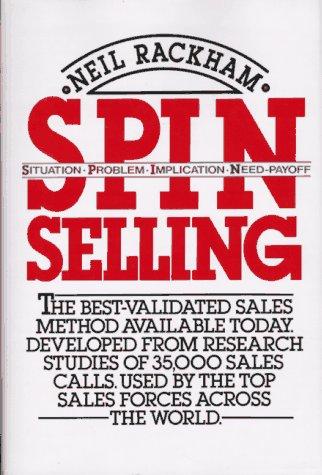
  • Cover: SPIN Selling

    SPIN Selling

    Book

    N. Rackham · 1988

    Grounded in the analysis of thousands of sales calls, the SPIN method structures customer discovery through four types of question (Situation, Problem, Implication, Need-payoff) for complex sales.

  • Cover: The Negotiating Game

    The Negotiating Game

    Book

    C. L. Karrass · 1970

    A pragmatic classic of business negotiation: tactics, power balance and preparation. Karrass sums up his motto, you get what you negotiate, not what you deserve.

  • Cover: Secrets of Power Negotiating

    Secrets of Power Negotiating

    Book

    R. Dawson · 1987

    An arsenal of opening, middle and closing "gambits" to gain the upper hand in commercial negotiation, explained step by step.

C. Karrass, R. Dawson, H. Cohen, N. Rackham (SPIN), T. Gordon (DESC / active listening).

On video

See the technique in action

Videos to picture The Sharp Angle Close and anchor it through examples.

A verified video selection is being enriched; the search above already surfaces the best videos on the topic.

Technique map

Where this technique sits

Every technique sits within a network: what it draws on, what it combines with, where it applies, and how to defend against it.

Levers engaged

biases & emotions

Countered by

Spot its signals, neutralise it and turn it around with the defensive playbook on this page.

See the counter-techniques

Key takeaways

  • En une phrase

    The sharp angle close turns a buyer's request into a purchase commitment: when the customer asks for a concession ("can you throw in free delivery?"), the seller replies, "if I do, will you sign today?"i. The concession becomes conditional on the decision, turning a request into a closing lever.

  • The right reflex

    Set your own closing condition: "I'll sign if…"

  • Never do this

    Signing so as not to "miss" the offer.

7.0/10 tactical potential Moderate vigilance School grounded in research and field practice

Master this technique in real situations?

Our programmes turn theory into a concrete advantage.

Explore our programmes
Call Book a call