Context 1 / 6
Sales negotiation
A seller presents an offer as “a 20% saving” rather than an “80% cost”, or a package “at £3 a day” rather than “£1,095 a year”.

🧠 Cognitive science
Behavioural economics & social psychology
R. Cialdini ("Influence", 1984), D. Kahneman & A. Tversky, R. Thaler, D. Ariely.
Full detail in the “Origin & history” section below.

Author of the library
Negotiation lecturer at KEDGE Business School
A rare threefold background serving negotiation: teaching, commercial justice and audit, backed by experience as a company director in Bordeaux.
The very same reality presented from two different angles does not produce the same decision: “90% success” is more convincing than “10% failure”, even though the two are identical. The framing effect consists in choosing the wording that steers perception in the desired direction.
At a glance
Vigilance: moderate (4.0/10) · Preparation required: 5/10
Indicative profile: it situates the “Framing & justification” family as the Cognitive science school practises it, not this technique taken in isolation. Techniques from the same family and school therefore share the same profile. NEGOCOACH editorial rating out of 10, non-experimental · the higher the “relational risk” value, the more costly the technique is to the relationship.
NEGOCOACH assessment
Tactical potential 6.7/10 (effectiveness, impact, discretion) and vigilance moderate (relational and ethical risk): two distinct readings, deliberately never merged into a single score that would reward risk. NEGOCOACH editorial rating calibrated from the “Framing & justification” family and the “Cognitive science” school. Each criterion is rated out of 10; click to understand what it measures.
How far the technique can carry the negotiation in the intended direction when it is well executed.
Strength of the effect produced on the counterpart's perceptions, emotions and decisions.
How hard it is for the other party to notice the technique is being used. A high value = very discreet.
The information, analysis and rehearsal required upfront to use it effectively.
Potential cost to the relationship and to trust if the technique is spotted, refused or fails. A high value = riskier.
Moral acceptability: fairness, transparency and respect for the counterpart's autonomy. A high value = more defensible.
School grounded in experimental research
The school this technique stems from is grounded in replicated, peer-reviewed experimental work. This indicator qualifies the school, not the experimental validation of this technique taken in isolation.
Indicative NEGOCOACH editorial rating, for teaching purposes. For “Relational risk”, a high value signals a cost to the relationship, not a quality.
The framing effect was demonstrated by Daniel Kahneman and Amos Tversky in the 1980s, notably through their famous “Asian disease problem” (1981): depending on whether the same options are presented in terms of lives saved or lives lost, participants’ choices reverse radically. Stemming from their prospect theory, this effect overturned the notion that decisions are rational and independent of wording. In negotiation, it makes the choice of words a lever of persuasion in its own right.
The technique consists in wording the same information in the way that serves one’s objective: in terms of gain rather than loss (or the reverse, depending on the goal), with the reference point, the unit and the tone most favourable to acceptance.
Application by context
A seller presents an offer as “a 20% saving” rather than an “80% cost”, or a package “at £3 a day” rather than “£1,095 a year”.
A measure is framed as “preserving jobs” rather than “cutting headcount”, changing how it is received.
The negotiator frames an outcome as “what you gain” rather than “what you give up”, making acceptance easier.
A reform is presented from the angle of the benefit to the majority rather than the cost to a few.
A property is described as “full of potential” rather than “in need of renovation”, steering perception favourably.
A division is presented as “what each person receives” rather than “what each person gives up”.
Counter-techniques
Negotiation is also played on defence. Here is how to recognise this technique when it is used against you, and turn it around.
The signals that give it away
The counters that defuse it
Turn it into an advantage
Impose your own frame of reference before the other side sets theirs.
Accepting the implicit frame without naming it.
The framing effect is one of the best-demonstrated levers of persuasion: with identical content, wording changes the decision. Its limits: framing that is too contorted is perceived as fallacious; an analytical counterpart “reframes” the information themselves and neutralises the effect.
Useful in any presentation of an offer, a figure or a proposal. To be handled with care: the framing must remain honest so that it does not backfire into distrust.
Sales · The discount presented as a loss to be avoided: A B2B salesperson has to sell a maintenance contract. Rather than announcing “maintenance costs £12,000 a year”, they frame it: “without this contract, an uncovered breakdown exposes you to around £40,000 of lost production”. The same amount, presented as protection against a loss rather than as an expense, triggers the buyer’s loss aversion and lifts their resistance to the price. A scenario representative of the mechanism, not attributed to a real company.
Everyday life · 90% survival or 10% mortality: A classic illustration drawn from the experimental work of Tversky and Kahneman: a patient offered an operation is more likely to accept when told “90% of patients are alive one year later” than when told “10% die within the year”, even though the information is strictly identical. Gain/loss framing changes the decision at constant content.
This effect, demonstrated by Kahneman and Tversky, raises a singular difficulty, and it must be faced squarely: “90% success” and “10% failure” are rigorously equivalent. Neither wording is untruthful, and there is no neutral wording, since one has to choose one. A negotiator therefore cannot be reproached for framing, only for choosing. To choose the most comprehensible wording, the one that sheds light on the real stakes for that particular counterpart, is a service. The tipping point rests on a very particular awareness: when you know that the other wording, equally true, would lead your counterpart to decide differently, and you choose yours for that precise reason, you are no longer informing them, you are deciding in their place. The deception here is perfect in that it contains no false word and remains indefensible before them. The test is disarmingly simple and it grounds an honest practice: would you be willing to state both wordings? Choosing the wording that is most readily understood is clarity; choosing the one that decides on the other person’s behalf is manipulation without a lie.
Quick exercise
Answer in your head, then reveal the solution. Memory is built through active recall.
Frequently asked questions
The very same reality presented from two different angles does not produce the same decision: “90% success” is more convincing than “10% failure”, even though the two are identical. The framing effect consists in choosing the wording that steers perception in the desired direction.
It sits on the line: effective, but it can tip into manipulation if it exploits an information asymmetry. Use it with measure and without deliberate deceit.
Accepting the implicit frame without naming it. The right reflex: reframe with another reference.
NEGOCOACH does not assess the experimental validation of this technique in isolation. What we document is the grounding of its source school (Cognitive science): school grounded in experimental research. Full detail is in the "At a glance" section of this page.
Practise with AI
Copy, paste into your assistant, replace the [brackets]. Works with ChatGPT, Claude, Gemini, Mistral, Perplexity.
Build your plan before the meeting
You are an expert negotiation coach. Help me prepare to use the "The Framing Effect Technique" technique in the following situation: [describe your situation]. Give me: the conditions for success, a 3-step script, my counterpart's likely objections and how to answer them.
Rehearse against an AI counterpart
Play the role of my counterpart in a negotiation. I am going to test the "The Framing Effect Technique" technique. React realistically and with resistance, do not give in too quickly, then at the end analyse my performance and suggest 3 concrete improvements.
Analyse a past negotiation
Here is how my negotiation went: [paste the exchanges]. Analyse whether the "The Framing Effect Technique" technique was used well, what worked, the mistakes made, and spell out precisely what I could have done better.
References
Founding works of the 🧠 Cognitive science school this technique belongs to.
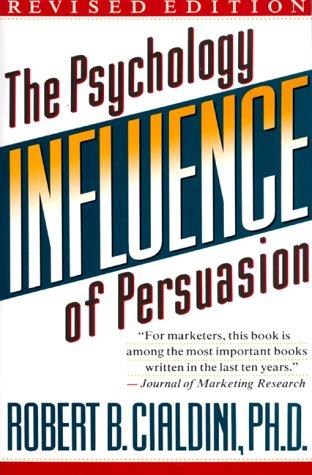
Influence, The Psychology of Persuasion
BookR. Cialdini · 1984
The founding work on the mechanisms of persuasion: six universal principles (reciprocity, consistency, social proof, authority, liking, scarcity) illustrated with striking experiments. A landmark in social psychology.

Thinking, Fast and Slow
BookD. Kahneman · 2011
The sum of Kahneman's work on decision-making: two systems of thought, one fast and intuitive, the other slow and analytical, and the long list of biases that distort our judgements. Essential to understanding others... and yourself.

Nudge
BookR. Thaler & C. Sunstein · 2008
How to steer choices without constraint, by acting on the "choice architecture". The book popularised the nudge and behavioural economics applied to public policy as much as to management.
Judgment under Uncertainty: Heuristics and Biases (Science)
ArticleA. Tversky & D. Kahneman · 1974
The founding paper (Science, 1974) that uncovered the heuristics and biases of judgement, including anchoring. The starting point of the behavioural-economics revolution.
R. Cialdini ("Influence", 1984), D. Kahneman & A. Tversky, R. Thaler, D. Ariely.
On video
Videos to picture The Framing Effect Technique and anchor it through examples.
Technique map
Every technique sits within a network: what it draws on, what it combines with, where it applies, and how to defend against it.
Spot its signals, neutralise it and turn it around with the defensive playbook on this page.
See the counter-techniquesThe very same reality presented from two different angles does not produce the same decision: “90% success” is more convincing than “10% failure”, even though the two are identical. The framing effect consists in choosing the wording that steers perception in the desired direction.
Impose your own frame of reference before the other side sets theirs.
Accepting the implicit frame without naming it.
Our programmes turn theory into a concrete advantage.