NEGOCOACH
115
Origin : FBI · Chris Voss

🕵️ FBI · Chris Voss

Tactical empathy

Chris Voss, "Never Split the Difference", 2016, FBI crisis negotiation.

Full detail in the “Origin & history” section below.

115

The Mirror Effect Technique

Communication tactics Technique 115 / 360
Alexandre Baumberger

Author of the library

Alexandre Baumberger

Negotiation lecturer at KEDGE Business School

A rare threefold background serving negotiation: teaching, commercial justice and audit, backed by experience as a company director in Bordeaux.

  • Teaching, KEDGE Business School Negotiation lecturer since 2014 (12 years).
  • Commercial justice, Commercial Court Judge from 2018 to 2026: litigation, then insolvency proceedings.
  • Audit & advisory, over 20 years Tax, employment and financial audit in major firms, for large groups.
In brief

Mirroring consists of repeating, in a slightly questioning tone, the last three or four words (or the key words) of your counterpart. Popularised by FBI negotiator Chris Voss, this micro-intervention almost always triggers elaboration: the other person clarifies, justifies themselves, says more. The mirror builds rapport, slows the exchange and draws out information that a direct question would never have obtained. It is the most discreet and least threatening data-gathering tool in the negotiator's repertoire.

Reading level

At a glance

Its family profile at a glance

Effectiveness Psychologicalimpact Discretion Preparation Relationalrisk Ethics
7.0 / 10 Tactical potential

Vigilance: low (3.5/10) · Preparation required: 4/10

Grounding in the source school School grounded in research and field practice

Indicative profile: it situates the “Communication tactics” family as the FBI · Chris Voss school practises it, not this technique taken in isolation. Techniques from the same family and school therefore share the same profile. NEGOCOACH editorial rating out of 10, non-experimental · the higher the “relational risk” value, the more costly the technique is to the relationship.

NEGOCOACH assessment

How to read this rating

Tactical potential 7.0/10 (effectiveness, impact, discretion) and vigilance low (relational and ethical risk): two distinct readings, deliberately never merged into a single score that would reward risk. NEGOCOACH editorial rating calibrated from the “Communication tactics” family and the “FBI · Chris Voss” school. Each criterion is rated out of 10; click to understand what it measures.

  • Effectiveness 7/10 · High

    How far the technique can carry the negotiation in the intended direction when it is well executed.

  • Psychological impact 7/10 · High

    Strength of the effect produced on the counterpart's perceptions, emotions and decisions.

  • Discretion 7/10 · High

    How hard it is for the other party to notice the technique is being used. A high value = very discreet.

  • Preparation 4/10 · Moderate

    The information, analysis and rehearsal required upfront to use it effectively.

  • Relational risk 3/10 · Low

    Potential cost to the relationship and to trust if the technique is spotted, refused or fails. A high value = riskier.

  • Ethics 7/10 · High

    Moral acceptability: fairness, transparency and respect for the counterpart's autonomy. A high value = more defensible.

Level of evidence

School grounded in research and field practice

The school this technique stems from combines academic work with long field practice. This indicator qualifies the school, not this technique taken in isolation.

Indicative NEGOCOACH editorial rating, for teaching purposes. For “Relational risk”, a high value signals a cost to the relationship, not a quality.

MIRRORING in a nutshell


Origin & history

The technique has its roots in the active listening theorised by psychologist Carl Rogers from the 1950s onwards, where the therapist's reformulation of the client signals total, non-judgemental understanding. It then draws on research into social mimicry: the chameleon effect demonstrated by Chartrand and Bargh in 1999, which establishes that we unconsciously imitate our interlocutors and warm more to those who imitate us. But it was Chris Voss, former lead FBI hostage negotiator, who formalised it under the name mirroring in Never Split the Difference (2016). In the crisis room, Voss found that arguing hardens the other party, whereas returning their own words to them prompts them to open up: the mirror became a field tool born of the most tense context imaginable.


Definition and principle

Mirroring is a communication tactic that consists of repeating verbatim a short fragment of the counterpart's words, generally the last few, delivered on a rising, inviting intonation. Drawn from the behavioural sciences and from hostage-negotiation practice, it rests on a deep social bias: we are reassured by what resembles us and driven to fill the silence that follows the mirror. By returning their own terms to the other person, you signal total listening without ever taking a position, contradicting or steering. The mirror asserts nothing: it invites elaboration, turns a monologue into a confidence and converts the other's speech into usable information.


Objectives of the technique

  • Get the counterpart to say more in order to gather information without asking a head-on question
  • Create a climate of trust and rapport through the feeling of being fully heard
  • Slow down the pace of the exchange to defuse tension and give yourself time to think
  • Surface the real stakes, unspoken concerns and hidden objections behind a stated position

Concrete examples of application

Application by context

The same technique, across every negotiation settings

Context 1 / 8

Sales negotiation

A client says: "Your offer is a bit expensive for us right now." The salesperson simply replies: "A bit expensive... right now?"

How to apply it

The mirror is placed right after the objection, before any price justification, to let the client unpack the real constraint themselves (budget, timing, competitive comparison).

Strengths

Avoids trench warfare over price and reveals the true reason for hesitation, often different from the figure stated.

Weaknesses

Repeated too mechanically on every sentence, it grates and gives the impression of a salesperson playing for time without committing.

Context 2 / 8

Procurement negotiation

A supplier announces: "Our lead times are fixed at eight weeks." The buyer echoes: "Fixed... at eight weeks?"

How to apply it

The buyer returns the sticking-point word ("fixed") to test the solidity of the constraint without confrontation, letting the supplier qualify it of their own accord.

Strengths

Often reveals hidden room for manoeuvre ("unless we start production earlier...") without the buyer having had to demand it.

Weaknesses

Faced with a seasoned seller who knows the technique, the mirror can be perceived as manipulation and harden their stance.

Context 3 / 8

Labour negotiation

In a pay negotiation meeting, a representative declares: "The teams are exhausted and demoralised." The HR director replies: "Exhausted and demoralised?"

How to apply it

The mirror replaces counter-argument with an invitation to document the feeling, turning a union slogan into concrete, discussable elements.

Strengths

Defuses emotional escalation and moves the interlocutor from the register of demand to that of factual description.

Weaknesses

If the climate is already adversarial, echoing the strong words can be experienced as an ironic provocation.

Context 4 / 8

Crisis management

During a hostage situation, the barricaded individual shouts: "Nobody listens to me, I've had enough!" The negotiator calmly repeats: "Nobody listens to you...?"

How to apply it

The technique's founding context: the mirror keeps the channel of dialogue open and prompts the perpetrator to verbalise their real demand rather than act.

Strengths

Proves empirically, on the most tense terrain of all, the mirror's capacity to lower the charge and gather vital information.

Weaknesses

Requires the right tone and a slow pace; poorly calibrated, it can sound mechanical and exasperate someone already at breaking point.

Context 5 / 8

Political negotiation

In a debate, an opponent asserts: "Your plan will ruin the middle classes." The candidate replies: "Ruin... the middle classes?"

How to apply it

The mirror serves to force the opponent to specify and over-expose a vague accusation, rather than denying it head-on in front of the audience.

Strengths

Shifts the burden of proof onto the accuser and highlights the imprecision or exaggeration of the attack.

Weaknesses

The television format leaves little room for silence; the mirror can be cut off and appear to be an evasion of the question.

Context 6 / 8

Real-estate negotiation

A buyer views a property and lets slip: "Everything would need redoing, that's a real budget." The agent echoes: "Everything redoing... a real budget?"

How to apply it

The agent returns the renovation objection to have the buyer quantify the feeling and distinguish a bargaining pretext from genuine concern.

Strengths

Reveals whether the buyer is trying to drive the price down or is genuinely put off, and shapes the rest of the pitch.

Weaknesses

In a short, sensory viewing, a badly placed mirror can emphasise the flaw instead of playing it down.

Context 7 / 8

Cross-cultural negotiation

In a negotiation with a Japanese delegation, a partner cautiously says: "That will perhaps be difficult." The negotiator gently echoes: "Perhaps difficult...?"

How to apply it

The mirror helps decode an implicit "no" characteristic of high-context cultures, inviting the interlocutor to clarify without making them lose face.

Strengths

Brings out unspoken reservations while respecting the preference for indirectness and harmony.

Weaknesses

The degree of tolerated silence varies greatly across cultures; what invites elaboration here may cause discomfort elsewhere.

Context 8 / 8

Family negotiation

A teenager asserts: "Anyway, you never trust me." The parent replies without bristling: "Never trust you...?"

How to apply it

The mirror replaces defensiveness ("of course we do!") with an opening that invites the child to spell out the precise situation that hurt them.

Strengths

Breaks out of the defensive stand-off and moves from a sweeping reproach to a concrete, reparable fact.

Weaknesses

Used coldly or with irony, it is immediately perceived as a technique and kills the sincerity of the exchange.


Counter-techniques

Spot and neutralise this technique

Negotiation is also played on defence. Here is how to recognise this technique when it is used against you, and turn it around.

Detect

The signals that give it away

  • Long, heavy silences
  • Rapid-fire questions
  • Reformulations that distort what you said

Neutralise

The counters that defuse it

  • Tolerate silence without filling it
  • Take the lead with a question
  • Immediately correct abusive reformulations

Turn around

Turn it into an advantage

Use silence in turn: whoever speaks first often concedes.

The trap to avoid

Filling the void by giving up a concession.

In brief

  • Difficulty: Low to moderate
  • Estimated effectiveness: High for information gathering and de-escalation
  • Time to deploy: Immediate, a few seconds per intervention
  • Areas of application: Sales, Procurement, Human resources, Crisis negotiation, Mediation, Management, Diplomacy
  • Synonyms: Mirroring, Echo repetition, Mirror reformulation, Verbal chameleon effect
  • Tags: active listening, information gathering, Chris Voss, tactical empathy, mimicry, reformulation

Strengths and weaknesses

The great strength of mirroring lies in its zero cognitive cost and its apparent harmlessness: it contradicts nothing, commits to nothing, and yet it makes people talk. By signalling total listening, it activates the human need to be understood and triggers a reciprocity of trust. It works as a revealer: where a direct question puts people on the defensive, the mirror lets the interlocutor choose what they disclose, which makes the information richer and more spontaneous. Finally, it offers the negotiator precious thinking time and a way to regain the initiative without ever raising their voice.


When to use this technique?

The mirror is particularly effective when you lack information and wish to gather it without questioning head-on, when tension is rising and you need to slow down to defuse it, or when you suspect that a stated position conceals a different real stake. It excels in the discovery phase, in the face of an objection, or to draw out an interlocutor who is closing up. Conversely, it should be avoided when the decision is made and you need to close, when time is very short, or with someone who knows the technique and will perceive it as a device.


Famous cases

Sales · The waitress who repeats the order (van Baaren, 2003), In a field experiment carried out in a Dutch restaurant, Rick van Baaren and his colleagues asked a waitress to repeat the order word for word for half of her customers, and merely to acknowledge it for the other half. The result: the tip rose markedly when the waitress did the verbal mirror, both in frequency and in amount. The study documents empirically that simply repeating the other person's words makes them more generous, because it reinforces the perception of being listened to and interpersonal affinity.

Political · The debate where you return the attack to the accuser, In political jousting, echoing an accusation back allows you to shift the burden of proof onto the opponent. Rather than denying it ("that's false"), repeating the attack's strong words in a questioning tone forces the accuser to specify, to document and often to reveal the exaggeration of their claim in front of the audience. The mirror avoids validating the accusation through a defence and shifts attention onto the person who made it, without the candidate ever having to lose their temper.

Diplomatic · Decoding the implicit "no" in cross-cultural negotiation, In negotiations with high-context cultures, a refusal is rarely expressed head-on: it takes the form of "that will be difficult" or "we will study it". Gently repeating the cautious word ("difficult...?") invites the partner to clarify their reservation without losing face. The mirror acts here as a decoder: it brings out the unspoken while respecting the cultural preference for indirectness, whereas a closed question would have forced a polite answer devoid of content.

Legal · Mirroring in FBI hostage negotiations, Chris Voss, former lead FBI negotiator, recounts in Never Split the Difference how mirroring enabled him to handle extreme situations. Faced with a barricaded individual, repeating the last words rather than arguing keeps the channel of dialogue open and pushes the perpetrator to verbalise their real demand. Voss describes in particular negotiations where the accumulation of mirrors, combined with silence, brought the tension down and delivered the decisive information needed to resolve the crisis without violence.

Business · Chameleons secure better deals (Maddux, Galinsky, 2008), Maddux, Mullen and Galinsky showed experimentally that negotiators asked to discreetly mimic the gestures and language of their counterpart obtain better outcomes. In a negotiation where no obvious solution existed a priori, 67% of pairs reached an agreement when the buyer imitated the seller, against only 12.5% with no mimicry instruction. The effect operates through a rise in interpersonal trust: mimicry helps to uncover compatible interests and to "expand the pie".

Everyday life · The teenager who opens up after a mirror rather than a defence, When a child says "you never trust me", the parent's spontaneous reaction is to defend themselves, which immediately shuts down the conversation. Calmly repeating "never trust you...?" opens, on the contrary, a space in which the teenager spells out the precise situation that hurt them. This shift from the sweeping reproach to the concrete fact, largely derived from Carl Rogers' active listening, turns a confrontation into a reparable exchange and illustrates the everyday reach of the mirror beyond the professional sphere.

Common mistakes

  • Over-using the mirror by repeating every sentence: the effect becomes mechanical, noticeable and irritating, and betrays a device
  • Repeating in a flat or affirmative tone instead of the rising, inviting intonation: the mirror closes down instead of opening up
  • Following up immediately with a sentence without letting silence do its work: it is the void that prompts the other person to elaborate
  • Choosing the wrong words to return (secondary words) instead of the emotionally charged term that carries the real stake

How to recognise and counter this technique

Faced with an interlocutor applying the mirror to you, the counter consists first of naming it or smiling at it ("are you doing a bit of Chris Voss on me?"), which dissolves the effect by making it visible. You can also resist the silence that follows the mirror: rather than filling the void by disclosing more, return an open question ("what exactly do you want to know?") that puts the burden of clarification back on the other person. Finally, replying with a mirror on the mirror neutralises the manoeuvre and signals, without aggression, that the game has been spotted.


Limits and ethics

The mirror is no magic wand: it gathers and soothes, but does not close and does not convince on its own. Used mechanically, it turns into an irritant and signals a lack of sincerity. Its effectiveness depends heavily on the tone, on the accompanying silence and on the choice of words returned, three parameters hard to master under stress. Faced with a trained interlocutor, it loses its harmlessness and can be perceived as manipulation. Finally, its reach is culturally variable: the relationship to silence and repetition differs from one country to another, which means it must be calibrated.


Variants and related techniques

Mirroring comes in several forms. The pure verbal mirror (repeating the last words) is the most direct; summarising reformulation restates the idea in slightly different words to check understanding. Labelling, or emotional tagging, another of Chris Voss's tools, names the perceived feeling ("it sounds like this deadline worries you") rather than the words. Non-verbal mimicry (posture, pace, vocabulary), documented by the chameleon effect, works on the same lever of affinity. Finally, the mirror combines powerfully with tactical silence and calibrated "how" questions to steer without imposing.


Going further

  • Chris Voss & Tahl Raz, Never Split the Difference (2016), chapters on mirroring and tactical empathy
  • Carl Rogers, Client-Centered Therapy (1951), foundations of active listening and reformulation
  • Tanya Chartrand & John Bargh, "The Chameleon Effect" (1999), scientific basis of social mimicry
  • Robert Cialdini, Influence, on liking and similarity as levers of persuasion

Scientific foundations

  • Chartrand, T. L. & Bargh, J. A. (1999) The Chameleon Effect: The Perception-Behavior Link and Social Interaction Journal of Personality and Social Psychology, 76(6), 893-910, DOI: 10.1037/0022-3514.76.6.893
  • van Baaren, R. B., Holland, R. W., Steenaert, B. & van Knippenberg, A. (2003) Mimicry for money: Behavioral consequences of imitation Journal of Experimental Social Psychology, 39(4), 393-398, DOI: 10.1016/S0022-1031(03)00014-3
  • Maddux, W. W., Mullen, E. & Galinsky, A. D. (2008) Chameleons bake bigger pies and take bigger pieces: Strategic behavioral mimicry facilitates negotiation outcomes Journal of Experimental Social Psychology, 44(2), 461-468, DOI: 10.1016/j.jesp.2007.02.003
  • Voss, C. & Raz, T. (2016) Never Split the Difference: Negotiating As If Your Life Depended On It HarperBusiness, New York
  • Rogers, C. R. (1951) Client-Centered Therapy: Its Current Practice, Implications and Theory Houghton Mifflin, Boston
  • Cialdini, R. B. (2009) Influence: Science and Practice (5th ed.) Pearson, Boston

Quick exercise

Test yourself before answering

Answer in your head, then reveal the solution. Memory is built through active recall.

1 Quels signaux doivent vous alerter ?
  • Long, heavy silences
  • Rapid-fire questions
  • Reformulations that distort what you said
2 Quelles parades appliquer ?
  • Tolerate silence without filling it
  • Take the lead with a question
  • Immediately correct abusive reformulations

Frequently asked questions

The questions we get most

What is the "The Mirror Effect Technique" technique?

Mirroring consists of repeating, in a slightly questioning tone, the last three or four words (or the key words) of your counterpart. Popularised by FBI negotiator Chris Voss, this micro-intervention almost always triggers elaboration: the other person clarifies, justifies themselves, says more. The mirror builds rapport, slows the exchange and draws out information that a direct question would never have obtained. It is the most discreet and least threatening data-gathering tool in the negotiator's repertoire.

Is the "The Mirror Effect Technique" technique ethical?

Yes. Used in good faith it stays within a fair negotiation: it structures the exchange without deceiving the other party. Being transparent about your intentions strengthens the long-term relationship.

How do you defend against "The Mirror Effect Technique"?

Filling the void by giving up a concession. The right reflex: tolerate silence without filling it.

What is the "The Mirror Effect Technique" technique based on?

NEGOCOACH does not assess the experimental validation of this technique in isolation. What we document is the grounding of its source school (FBI · Chris Voss): school grounded in research and field practice. Full detail is in the "At a glance" section of this page.

Practise with AI

Three ready-to-use prompts

Copy, paste into your assistant, replace the [brackets]. Works with ChatGPT, Claude, Gemini, Mistral, Perplexity.

Prepare

Build your plan before the meeting

You are an expert negotiation coach. Help me prepare to use the "The Mirror Effect Technique" technique in the following situation: [describe your situation]. Give me: the conditions for success, a 3-step script, my counterpart's likely objections and how to answer them.

Simulate

Rehearse against an AI counterpart

Play the role of my counterpart in a negotiation. I am going to test the "The Mirror Effect Technique" technique. React realistically and with resistance, do not give in too quickly, then at the end analyse my performance and suggest 3 concrete improvements.

Debrief

Analyse a past negotiation

Here is how my negotiation went: [paste the exchanges]. Analyse whether the "The Mirror Effect Technique" technique was used well, what worked, the mistakes made, and spell out precisely what I could have done better.

References

Bibliography & credible sources

Founding works of the 🕵️ FBI · Chris Voss school this technique belongs to.

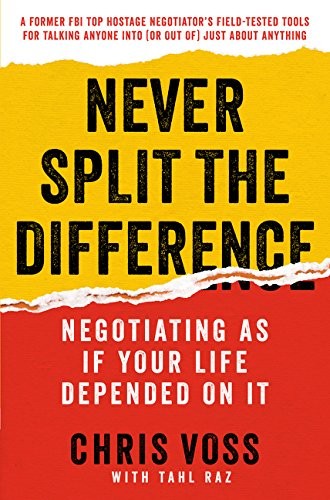
  • Cover: Never Split the Difference

    Never Split the Difference

    Book

    C. Voss & T. Raz · 2016

    The FBI's hostage-negotiation methods transposed to business and everyday life: tactical empathy, mirroring, labeling, calibrated questions. An emotional, counter-intuitive approach to persuasion.

  • Cover: Stalling for Time, My Life as an FBI Hostage Negotiator

    Stalling for Time, My Life as an FBI Hostage Negotiator

    Book

    G. Noesner · 2010

    The account of twenty-three years of crisis negotiation at the FBI by the head of its unit. A demonstration of the power of listening, patience and de-escalation in the most tense situations.

Chris Voss, "Never Split the Difference", 2016, FBI crisis negotiation.

On video

See the technique in action

Videos to picture The Mirror Effect Technique and anchor it through examples.

Technique map

Where this technique sits

Every technique sits within a network: what it draws on, what it combines with, where it applies, and how to defend against it.

Key takeaways

  • En une phrase

    Mirroring consists of repeating, in a slightly questioning tone, the last three or four words (or the key words) of your counterpart. Popularised by FBI negotiator Chris Voss, this micro-intervention almost always triggers elaboration: the other person clarifies, justifies themselves, says more. The mirror builds rapport, slows the exchange and draws out information that a direct question would never have obtained. It is the most discreet and least threatening data-gathering tool in the negotiator's repertoire.

  • The right reflex

    Use silence in turn: whoever speaks first often concedes.

  • Never do this

    Filling the void by giving up a concession.

7.0/10 tactical potential Low vigilance School grounded in research and field practice

This technique in action

Practical guides that put it to work, case by case.

All guides by situation

Master this technique in real situations?

Our programmes turn theory into a concrete advantage.

Explore our programmes
Call Book a call