Context 1 / 6
Sales negotiation
A buyer receives a quote and simply replies, "you'll have to do a good deal better than that," then falls silent. The seller, with no foothold to defend himself, comes back of his own accord with a discount.

🛠️ Methods & tactics
Anglo-Saxon schools of negotiation
C. Karrass, R. Dawson, H. Cohen, N. Rackham (SPIN), T. Gordon (DESC / active listening).
Full detail in the “Origin & history” section below.

Author of the library
Negotiation lecturer at KEDGE Business School
A rare threefold background serving negotiation: teaching, commercial justice and audit, backed by experience as a company director in Bordeaux.
The vise comes down to a single sentence, repeated calmly: "You'll have to do a good deal better than that." Without justifying or naming a figure, you hand the ball back to the other side and force them to improve their offer against themselves, often more than once. The silence that follows does all the work.
At a glance
Vigilance: moderate (5.0/10) · Preparation required: 5/10
Indicative profile: it situates the “Persuasion techniques” family as the Methods & tactics school practises it, not this technique taken in isolation. Techniques from the same family and school therefore share the same profile. NEGOCOACH editorial rating out of 10, non-experimental · the higher the “relational risk” value, the more costly the technique is to the relationship.
NEGOCOACH assessment
Tactical potential 7.0/10 (effectiveness, impact, discretion) and vigilance moderate (relational and ethical risk): two distinct readings, deliberately never merged into a single score that would reward risk. NEGOCOACH editorial rating calibrated from the “Persuasion techniques” family and the “Methods & tactics” school. Each criterion is rated out of 10; click to understand what it measures.
How far the technique can carry the negotiation in the intended direction when it is well executed.
Strength of the effect produced on the counterpart's perceptions, emotions and decisions.
How hard it is for the other party to notice the technique is being used. A high value = very discreet.
The information, analysis and rehearsal required upfront to use it effectively.
Potential cost to the relationship and to trust if the technique is spotted, refused or fails. A high value = riskier.
Moral acceptability: fairness, transparency and respect for the counterpart's autonomy. A high value = more defensible.
School grounded in research and field practice
The school this technique stems from combines academic work with long field practice. This indicator qualifies the school, not this technique taken in isolation.
Indicative NEGOCOACH editorial rating, for teaching purposes. For “Relational risk”, a high value signals a cost to the relationship, not a quality.
The vise ("the vise gambit") was codified by Roger Dawson, one of the most influential negotiation trainers in the United States, in Secrets of Power Negotiating (1987). Dawson uses it to illustrate a principle he hammers home: in a negotiation, whoever speaks last after an offer is often the one who wins. By boiling your reply down to a single unjustified sentence, you deny the other party any purchase for counter-argument and transfer the entire burden of proof onto them. The technique embodies the idea that verbal minimalism, coupled with silence, is a pressure weapon in its own right.
A minimalist pressure tactic, the vise exploits the discomfort of the void: the party who has just made an offer, having no counter-proposal to respond to, fills the silence by conceding. Arguing nothing prevents the other side from counter-arguing and concentrates the whole burden of proof on them.
Application by context
A buyer receives a quote and simply replies, "you'll have to do a good deal better than that," then falls silent. The seller, with no foothold to defend himself, comes back of his own accord with a discount.
Faced with an initial management proposal, a union negotiator merely says, "that falls short, this needs a serious rethink," forcing the management to sweeten its offer.
A mediator repeats, "this gesture isn't enough, you need to go further," without specifying, pushing the party to outbid itself in its conciliatory gestures.
A party leader meets a concession with "that is wholly inadequate given what is at stake," obliging the opposing camp to improve its position to avoid the talks collapsing.
To a seller's counter-offer, the buyer lets slip, "you'll need to make a real effort on that price," leaving the seller to fill the silence with a fresh reduction.
In a negotiation between heirs, one replies to a proposal with "this division isn't even-handed, it needs revisiting," compelling the other to adjust without a single specific argument having been put forward.
Counter-techniques
Negotiation is also played on defence. Here is how to recognise this technique when it is used against you, and turn it around.
The signals that give it away
The counters that defuse it
Turn it into an advantage
Demand a counterpart for each of your "yeses".
Accepting small commitments that lock you in.
The vise is economical, hard to counter (you cannot refute a non-proposal) and shifts all the pressure onto the other side. Its limits: by never proposing anything, you risk deadlock or irritation; against a seasoned negotiator, the riposte ("what exactly are you proposing?") turns the vise back on you.
Useful when the other side has more room than you and the balance of power allows it. Best avoided if you need to demonstrate your good faith, or when facing someone who will in turn demand a costed counter-proposal.
Sales · The buyer who won't budge: An industrial buyer receives a supplier's quote of €84,000 for a batch of machines. Rather than proposing a counter-price (which would become the new high anchor), he simply replies: "You'll have to do better than that," then falls silent and waits. Uncomfortable in the silence, the salesperson ends up conceding a discount and throwing in an extended warranty of his own accord, without the buyer ever putting forward a figure. The vise did all the work: it was the seller who negotiated against himself.
Everyday life · The garage's price: A private individual receives a repair quote. Instead of contesting it line by line, he says calmly, "Honestly, you'd need to make an effort on that," then lets the silence settle. The mechanic, trying to fill the void, spontaneously offers to remove a labour item. Here the technique rests entirely on the brevity of the sentence and the refusal to pad it out.
The vise brings no argument at all: that is in fact its very principle, it works precisely because it does not argue, does not name a figure and does not justify itself, leaving the other side to negotiate against themselves to fill the void. Saying that an offer is inadequate is perfectly legitimate, and doing so without piling on explanations avoids sterile debates. What is problematic is the repeated, one-sided use: endlessly parroting "you'll have to do a good deal better" without ever giving your own position is no longer negotiating, it is making the other side pay the price of your silence. Negotiation presupposes a minimum of reciprocity; the vise removes it. Its seriousness changes radically with the balance of power: between seasoned professionals it is a familiar duel and the device wears out fast. Faced with a counterpart in a position of dependence, a supplier who cannot afford to lose the account, a candidate who needs the job, silence is no longer a tactic, it is the exercise of power. Saying an offer is inadequate is a position; refusing indefinitely to give one is a power play dressed up as negotiation.
Quick exercise
Answer in your head, then reveal the solution. Memory is built through active recall.
Frequently asked questions
The vise comes down to a single sentence, repeated calmly: "You'll have to do a good deal better than that." Without justifying or naming a figure, you hand the ball back to the other side and force them to improve their offer against themselves, often more than once. The silence that follows does all the work.
It sits on the line: effective, but it can tip into manipulation if it exploits an information asymmetry. Use it with measure and without deliberate deceit.
Accepting small commitments that lock you in. The right reflex: spot the small-yes → big-yes mechanism.
NEGOCOACH does not assess the experimental validation of this technique in isolation. What we document is the grounding of its source school (Methods & tactics): school grounded in research and field practice. Full detail is in the "At a glance" section of this page.
Practise with AI
Copy, paste into your assistant, replace the [brackets]. Works with ChatGPT, Claude, Gemini, Mistral, Perplexity.
Build your plan before the meeting
You are an expert negotiation coach. Help me prepare to use the "The Vise Technique" technique in the following situation: [describe your situation]. Give me: the conditions for success, a 3-step script, my counterpart's likely objections and how to answer them.
Rehearse against an AI counterpart
Play the role of my counterpart in a negotiation. I am going to test the "The Vise Technique" technique. React realistically and with resistance, do not give in too quickly, then at the end analyse my performance and suggest 3 concrete improvements.
Analyse a past negotiation
Here is how my negotiation went: [paste the exchanges]. Analyse whether the "The Vise Technique" technique was used well, what worked, the mistakes made, and spell out precisely what I could have done better.
References
Founding works of the 🛠️ Methods & tactics school this technique belongs to.
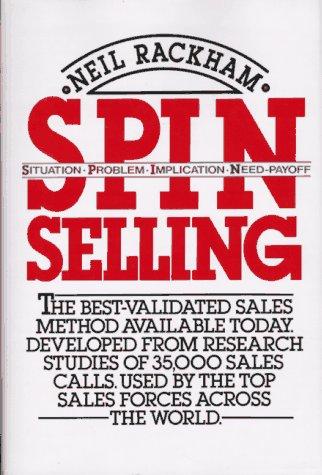
SPIN Selling
BookN. Rackham · 1988
Grounded in the analysis of thousands of sales calls, the SPIN method structures customer discovery through four types of question (Situation, Problem, Implication, Need-payoff) for complex sales.

The Negotiating Game
BookC. L. Karrass · 1970
A pragmatic classic of business negotiation: tactics, power balance and preparation. Karrass sums up his motto, you get what you negotiate, not what you deserve.

Secrets of Power Negotiating
BookR. Dawson · 1987
An arsenal of opening, middle and closing "gambits" to gain the upper hand in commercial negotiation, explained step by step.
C. Karrass, R. Dawson, H. Cohen, N. Rackham (SPIN), T. Gordon (DESC / active listening).
On video
Videos to picture The Vise Technique and anchor it through examples.
A verified video selection is being enriched; the search above already surfaces the best videos on the topic.
Technique map
Every technique sits within a network: what it draws on, what it combines with, where it applies, and how to defend against it.
Spot its signals, neutralise it and turn it around with the defensive playbook on this page.
See the counter-techniquesThe vise comes down to a single sentence, repeated calmly: "You'll have to do a good deal better than that." Without justifying or naming a figure, you hand the ball back to the other side and force them to improve their offer against themselves, often more than once. The silence that follows does all the work.
Demand a counterpart for each of your "yeses".
Accepting small commitments that lock you in.
Our programmes turn theory into a concrete advantage.