Context 1 / 6
Sales negotiation
A salesperson asks "are you going for the standard or the premium package?" rather than "are you interested?", steering towards a yes.

🛠️ Methods & tactics
Anglo-Saxon schools of negotiation
C. Karrass, R. Dawson, H. Cohen, N. Rackham (SPIN), T. Gordon (DESC / active listening).
Full detail in the “Origin & history” section below.

Author of the library
Negotiation lecturer at KEDGE Business School
A rare threefold background serving negotiation: teaching, commercial justice and audit, backed by experience as a company director in Bordeaux.
The alternative close consists of offering a choice between two options that both lead to "yes": "would you prefer delivery on Tuesday or Thursday?" rather than "do you want to buy?". By steering towards a choice between two ways of saying yes, it presupposes agreement and sidesteps the "no".
At a glance
Vigilance: moderate (5.0/10) · Preparation required: 5/10
Indicative profile: it situates the “Persuasion techniques” family as the Methods & tactics school practises it, not this technique taken in isolation. Techniques from the same family and school therefore share the same profile. NEGOCOACH editorial rating out of 10, non-experimental · the higher the “relational risk” value, the more costly the technique is to the relationship.
NEGOCOACH assessment
Tactical potential 7.0/10 (effectiveness, impact, discretion) and vigilance moderate (relational and ethical risk): two distinct readings, deliberately never merged into a single score that would reward risk. NEGOCOACH editorial rating calibrated from the “Persuasion techniques” family and the “Methods & tactics” school. Each criterion is rated out of 10; click to understand what it measures.
How far the technique can carry the negotiation in the intended direction when it is well executed.
Strength of the effect produced on the counterpart's perceptions, emotions and decisions.
How hard it is for the other party to notice the technique is being used. A high value = very discreet.
The information, analysis and rehearsal required upfront to use it effectively.
Potential cost to the relationship and to trust if the technique is spotted, refused or fails. A high value = riskier.
Moral acceptability: fairness, transparency and respect for the counterpart's autonomy. A high value = more defensible.
School grounded in research and field practice
The school this technique stems from combines academic work with long field practice. This indicator qualifies the school, not this technique taken in isolation.
Indicative NEGOCOACH editorial rating, for teaching purposes. For “Relational risk”, a high value signals a cost to the relationship, not a quality.
This closing technique (the alternative close, or illusory choice) is a sales classic formalised by the American schools of selling from the middle of the twentieth century onwards (notably around figures such as Elmer Wheeler or J. Douglas Edwards). It exploits a cognitive mechanism: by focusing attention on the "how" of the purchase rather than the "whether", it slips the commitment decision under the radar. The person, busy choosing between two arrangements, crosses the threshold of agreement in principle without giving it any thought.
The technique consists of framing, at the moment of closing, a closed question offering two positive options (two dates, two packages, two arrangements), both of which assume agreement. The "no" is no longer a natural answer to the question asked.
Application by context
A salesperson asks "are you going for the standard or the premium package?" rather than "are you interested?", steering towards a yes.
A negotiator proposes "shall we formalise this agreement today or meet again tomorrow to sign?", presupposing agreement in principle.
The mediator asks "would you prefer to resolve this through this option or that one?", both leading to a resolution.
The choice submitted is between two arrangements of a measure already assumed to be adopted, rather than its adoption itself.
The agent asks "will you sign the preliminary contract at the solicitor's on Tuesday or Friday?", presupposing the decision to buy.
One proposes "shall we settle the division amicably this week or next?", with agreement in principle taken for granted.
Counter-techniques
Negotiation is also played on defence. Here is how to recognise this technique when it is used against you, and turn it around.
The signals that give it away
The counters that defuse it
Turn it into an advantage
Demand a counterpart for each of your "yeses".
Accepting small commitments that lock you in.
The alternative close eases the decision, avoids the anxiety-inducing "yes or no" question and speeds up the conclusion. Its limitations: clumsy or premature, it is perceived as a manipulation that puts people on the defensive; it only works if the other party is already ripe to say yes.
Effective at the moment of closing, when agreement in principle is secured but the other party hesitates to take the plunge. To be avoided early in the negotiation or when facing someone who is not yet convinced.
Sales · "Tuesday or Thursday, then?": A salesperson selling office equipment has finished the demonstration; the prospect is convinced of the value but has not yet said yes. Rather than asking "Would you like to place an order?" (a closed question that invites "I'll think about it"), the salesperson follows up: "For the delivery of the installation, would you rather have a Tuesday or a Thursday?" Both answers presuppose the purchase. The client, picturing their diary, replies "Thursday suits me", and the conversation slides naturally towards finalising the purchase order. The technique did not create the decision (the offer was already accepted on the substance); it prompted the last step by removing the "decide nothing" option. Used on a prospect not yet convinced, the same question would have seemed manipulative and provoked a rejection.
Everyday life · The double choice that assumes the yes: A parent wants a reluctant child to put on their coat before going out. Rather than "Will you put your coat on?" (which invites a "no"), they offer: "Will you take the blue coat or the red one?" Both answers assume the coat will be put on; the child, focused on the choice of colour, stops contesting the principle. It is the same double-bind mechanism: one no longer negotiates the "whether", only the "how". The example illustrates the ethical limits of the technique, effective when the underlying decision is legitimate and already secured, perceived as a manipulation as soon as it serves to spirit away a genuine disagreement.
The entry itself gives this technique its other name, and it amounts to a confession: the "illusory choice". The device does not offer one choice, it offers two, but both lead to the yes, so that the fundamental question, should one buy, is never asked. It is not won, it is spirited away. That is enough to mark its limit, but one must be fair: there is a perfectly sound use, and it is even the most common among good professionals. Once the decision is genuinely made, asking "Tuesday or Thursday?" is a service rendered, it avoids needless hesitation and moves things forward. Everything therefore turns on a verifiable tipping point: is the decision secured, yes or no? Using the alternative to cross the threshold of the yes in the other party's place is to take from them the one question that is theirs alone. A practical limitation finishes off its credibility: it is now so well known that it flags the salesperson, and the buyer who spots it replies "neither one nor the other" with a satisfaction you will have handed them. Offering two arrangements to someone who has decided is a service; offering two ways of saying yes to someone who has not decided spirits the decision away.
Quick exercise
Answer in your head, then reveal the solution. Memory is built through active recall.
Frequently asked questions
The alternative close consists of offering a choice between two options that both lead to "yes": "would you prefer delivery on Tuesday or Thursday?" rather than "do you want to buy?". By steering towards a choice between two ways of saying yes, it presupposes agreement and sidesteps the "no".
It sits on the line: effective, but it can tip into manipulation if it exploits an information asymmetry. Use it with measure and without deliberate deceit.
Accepting small commitments that lock you in. The right reflex: spot the small-yes → big-yes mechanism.
NEGOCOACH does not assess the experimental validation of this technique in isolation. What we document is the grounding of its source school (Methods & tactics): school grounded in research and field practice. Full detail is in the "At a glance" section of this page.
Practise with AI
Copy, paste into your assistant, replace the [brackets]. Works with ChatGPT, Claude, Gemini, Mistral, Perplexity.
Build your plan before the meeting
You are an expert negotiation coach. Help me prepare to use the "The Alternative Close Technique" technique in the following situation: [describe your situation]. Give me: the conditions for success, a 3-step script, my counterpart's likely objections and how to answer them.
Rehearse against an AI counterpart
Play the role of my counterpart in a negotiation. I am going to test the "The Alternative Close Technique" technique. React realistically and with resistance, do not give in too quickly, then at the end analyse my performance and suggest 3 concrete improvements.
Analyse a past negotiation
Here is how my negotiation went: [paste the exchanges]. Analyse whether the "The Alternative Close Technique" technique was used well, what worked, the mistakes made, and spell out precisely what I could have done better.
References
Founding works of the 🛠️ Methods & tactics school this technique belongs to.
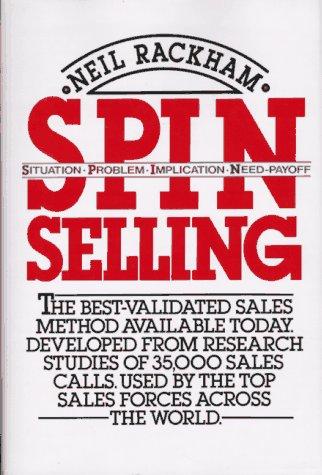
SPIN Selling
BookN. Rackham · 1988
Grounded in the analysis of thousands of sales calls, the SPIN method structures customer discovery through four types of question (Situation, Problem, Implication, Need-payoff) for complex sales.

The Negotiating Game
BookC. L. Karrass · 1970
A pragmatic classic of business negotiation: tactics, power balance and preparation. Karrass sums up his motto, you get what you negotiate, not what you deserve.

Secrets of Power Negotiating
BookR. Dawson · 1987
An arsenal of opening, middle and closing "gambits" to gain the upper hand in commercial negotiation, explained step by step.
C. Karrass, R. Dawson, H. Cohen, N. Rackham (SPIN), T. Gordon (DESC / active listening).
On video
Videos to picture The Alternative Close Technique and anchor it through examples.
A verified video selection is being enriched; the search above already surfaces the best videos on the topic.
Technique map
Every technique sits within a network: what it draws on, what it combines with, where it applies, and how to defend against it.
Spot its signals, neutralise it and turn it around with the defensive playbook on this page.
See the counter-techniquesThe alternative close consists of offering a choice between two options that both lead to "yes": "would you prefer delivery on Tuesday or Thursday?" rather than "do you want to buy?". By steering towards a choice between two ways of saying yes, it presupposes agreement and sidesteps the "no".
Demand a counterpart for each of your "yeses".
Accepting small commitments that lock you in.
Our programmes turn theory into a concrete advantage.