Context 1 / 6
Sales negotiation
A salesperson presents the target offer as the “recommended” and pre-ticked choice, the majority of customers following the path of least effort.

🧠 Cognitive science
Behavioural economics & social psychology
R. Cialdini ("Influence", 1984), D. Kahneman & A. Tversky, R. Thaler, D. Ariely.
Full detail in the “Origin & history” section below.

Author of the library
Negotiation lecturer at KEDGE Business School
A rare threefold background serving negotiation: teaching, commercial justice and audit, backed by experience as a company director in Bordeaux.
A nudge (a “gentle push”) consists in steering a decision by discreetly altering the context of the choice, without constraining or forbidding: making an option the default, giving it prominence, making the “yes” easier. You do not force anything; you make the desired behaviour easier and more natural.
At a glance
Vigilance: moderate (5.0/10) · Preparation required: 5/10
Indicative profile: it situates the “Persuasion techniques” family as the Cognitive science school practises it, not this technique taken in isolation. Techniques from the same family and school therefore share the same profile. NEGOCOACH editorial rating out of 10, non-experimental · the higher the “relational risk” value, the more costly the technique is to the relationship.
NEGOCOACH assessment
Tactical potential 7.3/10 (effectiveness, impact, discretion) and vigilance moderate (relational and ethical risk): two distinct readings, deliberately never merged into a single score that would reward risk. NEGOCOACH editorial rating calibrated from the “Persuasion techniques” family and the “Cognitive science” school. Each criterion is rated out of 10; click to understand what it measures.
How far the technique can carry the negotiation in the intended direction when it is well executed.
Strength of the effect produced on the counterpart's perceptions, emotions and decisions.
How hard it is for the other party to notice the technique is being used. A high value = very discreet.
The information, analysis and rehearsal required upfront to use it effectively.
Potential cost to the relationship and to trust if the technique is spotted, refused or fails. A high value = riskier.
Moral acceptability: fairness, transparency and respect for the counterpart's autonomy. A high value = more defensible.
School grounded in experimental research
The school this technique stems from is grounded in replicated, peer-reviewed experimental work. This indicator qualifies the school, not the experimental validation of this technique taken in isolation.
Indicative NEGOCOACH editorial rating, for teaching purposes. For “Relational risk”, a high value signals a cost to the relationship, not a quality.
The concept was popularised by the economist Richard Thaler and the legal scholar Cass Sunstein in Nudge (2008), which inspired “nudge units” in numerous governments. It rests on the idea of “choice architecture”: the way options are presented massively influences decisions, without people being aware of it. The founding example: making organ donation or retirement saving the “default” (with the possibility of opting out) multiplies participation rates. The nudge weds behavioural economics to respect for individual freedom.
The technique acts on the decision-making environment rather than on arguments: default option, order of presentation, reduction of effort, a reminder at the right moment. It exploits our automatic habits while preserving the other party's freedom of choice.
Application by context
A salesperson presents the target offer as the “recommended” and pre-ticked choice, the majority of customers following the path of least effort.
A company agreement makes enrolment in a scheme automatic (with opt-out), which sharply increases its take-up.
A mediator simplifies to the utmost the steps required to accept an agreement (pre-filled form, fewer stages), removing the barriers to a decision.
An administration sets the desirable option as the default (recycling, donation), securing take-up without any obligation.
An agent highlights and eases the financing arrangement of the option they wish to promote, making it simpler to choose.
In a settlement, a reasonable “default” split is proposed that each party can adjust, most of them rallying to it.
Counter-techniques
Negotiation is also played on defence. Here is how to recognise this technique when it is used against you, and turn it around.
The signals that give it away
The counters that defuse it
Turn it into an advantage
Demand a counterpart for each of your "yeses".
Accepting small commitments that lock you in.
The nudge is effective, inexpensive and respectful of the other party's freedom. Its limits: it raises ethical questions (steering without saying so), loses its force if it is perceived, and is unsuited to decisions that demand conscious, fully owned deliberation.
Useful for easing a decision when the desired option is also in the other party's interest. To be avoided when pushing a choice that harms them, on pain of manipulation.
Sales · The recommended option given prominence: A salesperson presents three subscription plans, positioning the middle one under a 'Recommended choice' banner and pre-ticking it in the quotation. Without forbidding the other options or changing the prices, this choice architecture steers a majority of customers towards the intermediate plan: the nudge operates through the default and salience, the buyer retaining full freedom to select another offer. A scenario representative of common practice, not attributed to any specific company.
Everyday life · Organ donation by default: Countries that apply an opt-out system (presumed consent to organ donation, with the possibility of withdrawing) show consent rates far higher than those requiring voluntary registration (opt-in). The default option, without ever constraining the citizen who remains free to refuse, illustrates the power of the nudge documented by Johnson & Goldstein (2003).
The nudge is the technique whose limits have been most discussed by its own authors, and one must give them their due: Thaler summed up the rule in three words, “nudge for good”. Three conditions make the gentle push defensible, and their absence condemns it. The choice must remain genuinely open, with the discarded option as accessible as the promoted one. The device must be capable of being announced without losing its effect: a nudge that does not survive its own disclosure is manipulation. And it must serve the one who is pushed, not the one who pushes. The abuse has even been given a name, sludge: the default option that suits you, one-click enrolment when cancellation takes six screens, the pre-ticked box. The reversal is stark and easy to spot: the moment you make easy what profits you and painful what protects the other, you are no longer aiding a decision, you are extorting it through architecture. Making easy what serves the other is a gentle push; making difficult what protects them is a trap of architecture.
Quick exercise
Answer in your head, then reveal the solution. Memory is built through active recall.
Frequently asked questions
A nudge (a “gentle push”) consists in steering a decision by discreetly altering the context of the choice, without constraining or forbidding: making an option the default, giving it prominence, making the “yes” easier. You do not force anything; you make the desired behaviour easier and more natural.
It sits on the line: effective, but it can tip into manipulation if it exploits an information asymmetry. Use it with measure and without deliberate deceit.
Accepting small commitments that lock you in. The right reflex: spot the small-yes → big-yes mechanism.
NEGOCOACH does not assess the experimental validation of this technique in isolation. What we document is the grounding of its source school (Cognitive science): school grounded in experimental research. Full detail is in the "At a glance" section of this page.
Practise with AI
Copy, paste into your assistant, replace the [brackets]. Works with ChatGPT, Claude, Gemini, Mistral, Perplexity.
Build your plan before the meeting
You are an expert negotiation coach. Help me prepare to use the "The Nudge Technique" technique in the following situation: [describe your situation]. Give me: the conditions for success, a 3-step script, my counterpart's likely objections and how to answer them.
Rehearse against an AI counterpart
Play the role of my counterpart in a negotiation. I am going to test the "The Nudge Technique" technique. React realistically and with resistance, do not give in too quickly, then at the end analyse my performance and suggest 3 concrete improvements.
Analyse a past negotiation
Here is how my negotiation went: [paste the exchanges]. Analyse whether the "The Nudge Technique" technique was used well, what worked, the mistakes made, and spell out precisely what I could have done better.
References
Founding works of the 🧠 Cognitive science school this technique belongs to.
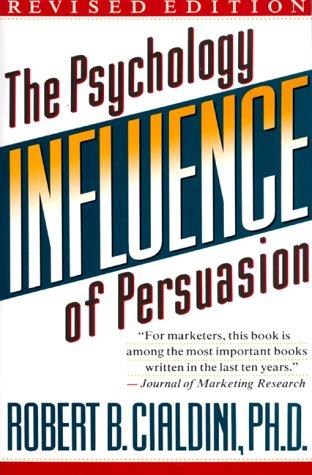
Influence, The Psychology of Persuasion
BookR. Cialdini · 1984
The founding work on the mechanisms of persuasion: six universal principles (reciprocity, consistency, social proof, authority, liking, scarcity) illustrated with striking experiments. A landmark in social psychology.

Thinking, Fast and Slow
BookD. Kahneman · 2011
The sum of Kahneman's work on decision-making: two systems of thought, one fast and intuitive, the other slow and analytical, and the long list of biases that distort our judgements. Essential to understanding others... and yourself.

Nudge
BookR. Thaler & C. Sunstein · 2008
How to steer choices without constraint, by acting on the "choice architecture". The book popularised the nudge and behavioural economics applied to public policy as much as to management.
Judgment under Uncertainty: Heuristics and Biases (Science)
ArticleA. Tversky & D. Kahneman · 1974
The founding paper (Science, 1974) that uncovered the heuristics and biases of judgement, including anchoring. The starting point of the behavioural-economics revolution.
R. Cialdini ("Influence", 1984), D. Kahneman & A. Tversky, R. Thaler, D. Ariely.
On video
Videos to picture The Nudge Technique and anchor it through examples.
A verified video selection is being enriched; the search above already surfaces the best videos on the topic.
Technique map
Every technique sits within a network: what it draws on, what it combines with, where it applies, and how to defend against it.
Spot its signals, neutralise it and turn it around with the defensive playbook on this page.
See the counter-techniquesA nudge (a “gentle push”) consists in steering a decision by discreetly altering the context of the choice, without constraining or forbidding: making an option the default, giving it prominence, making the “yes” easier. You do not force anything; you make the desired behaviour easier and more natural.
Demand a counterpart for each of your "yeses".
Accepting small commitments that lock you in.
Our programmes turn theory into a concrete advantage.